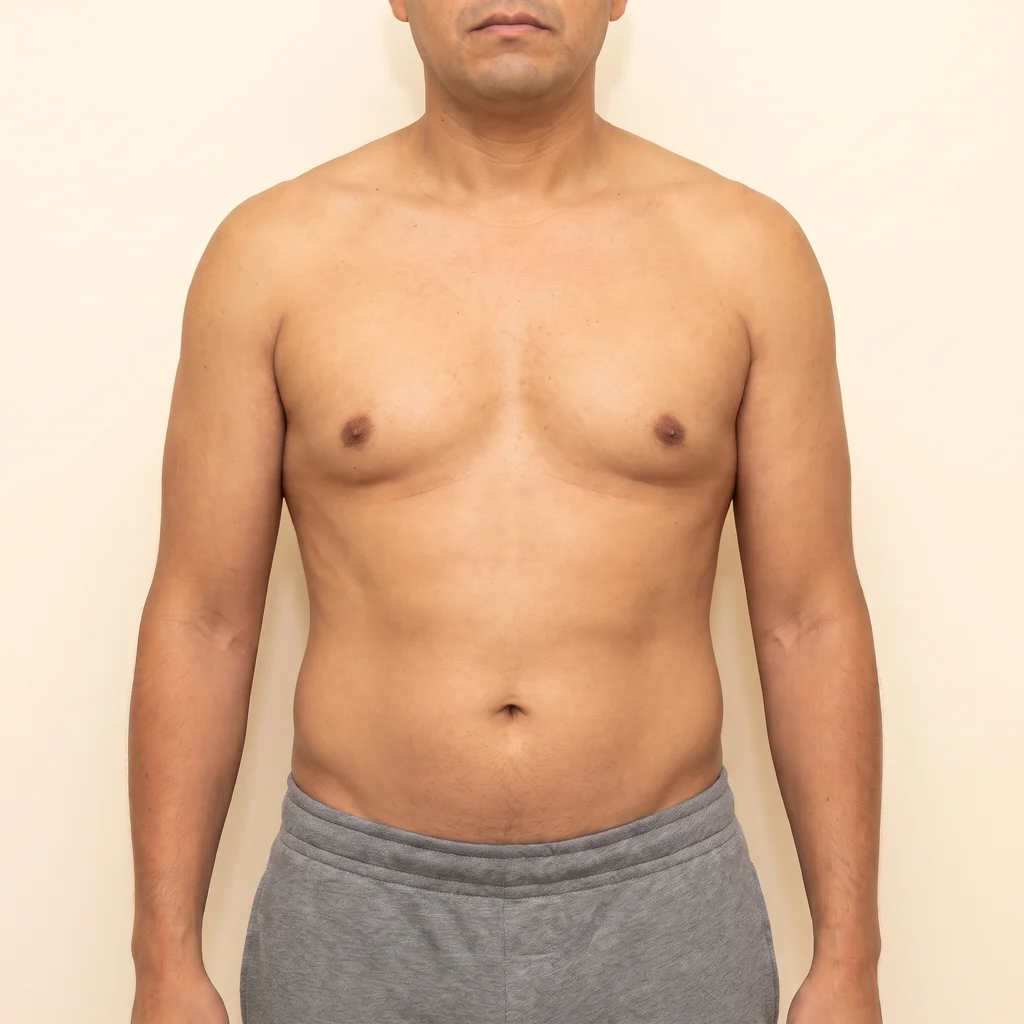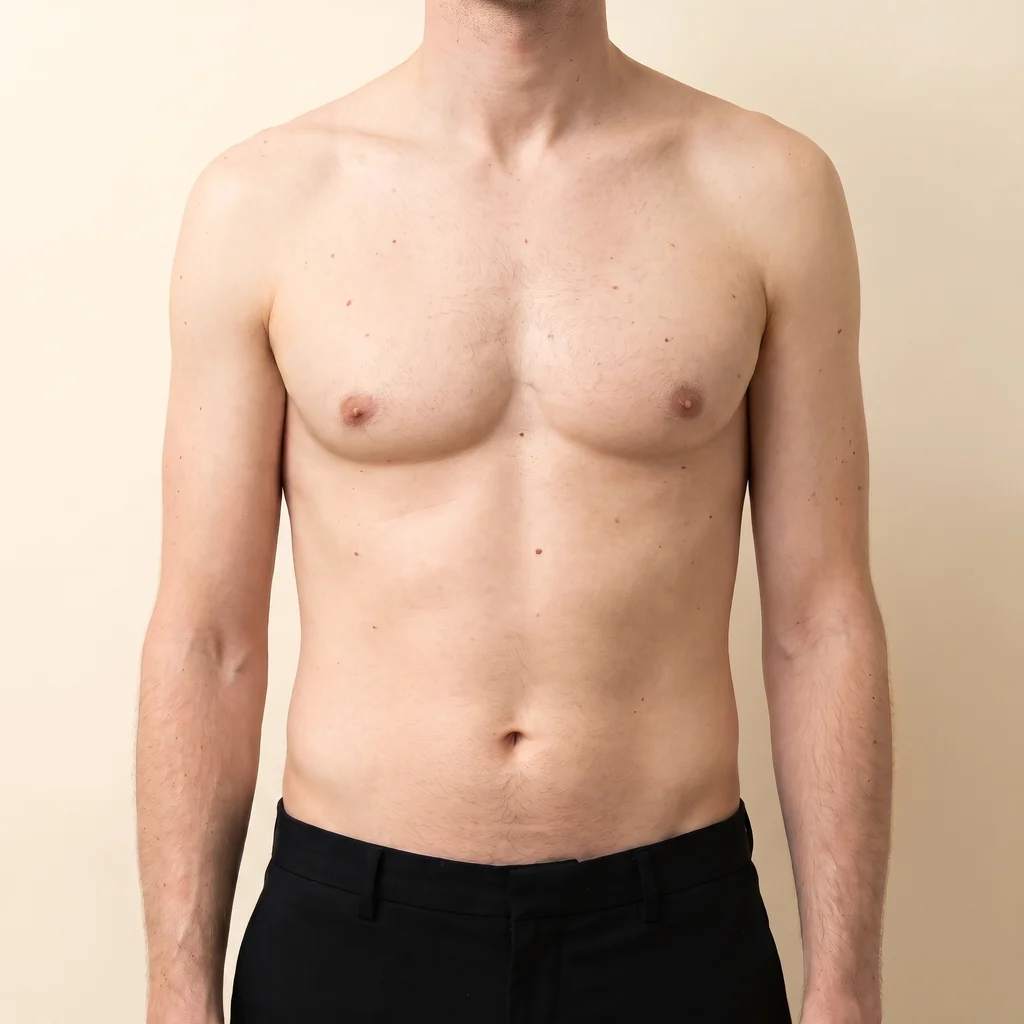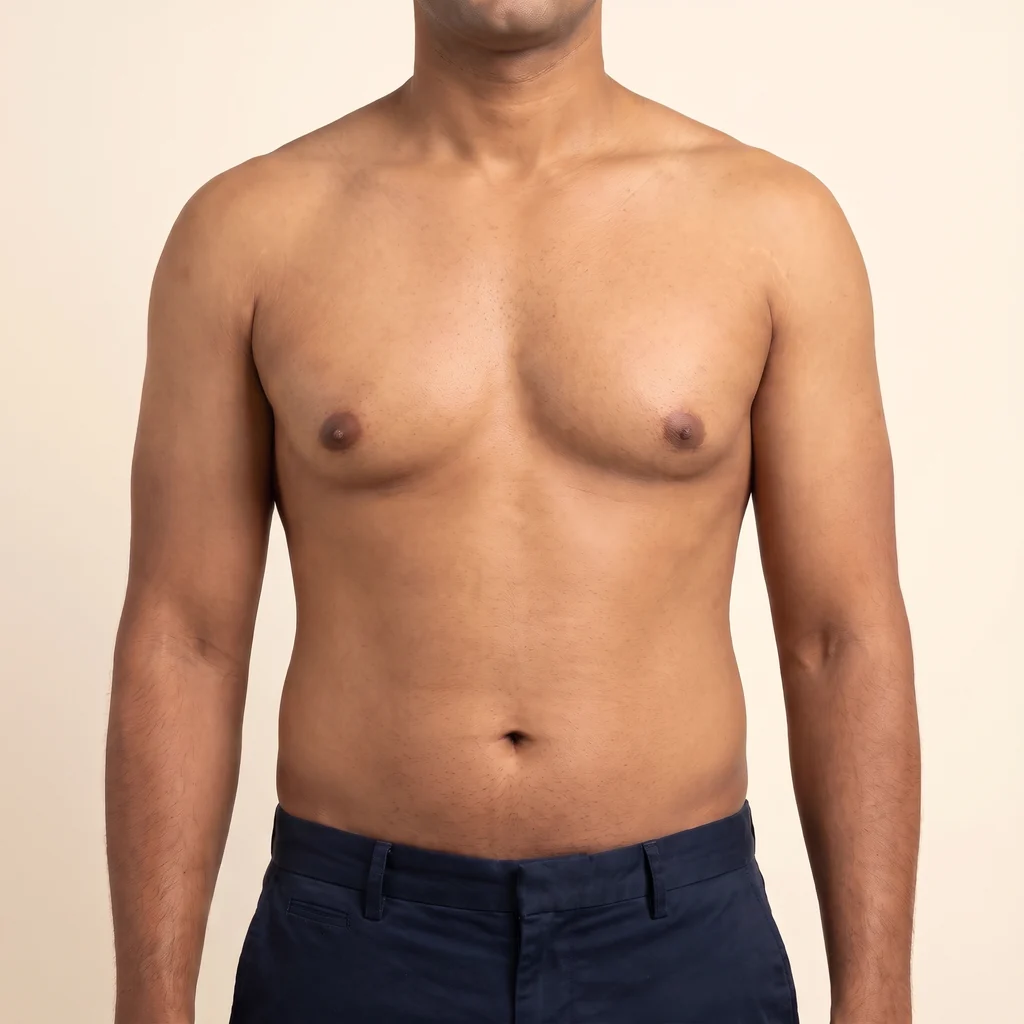
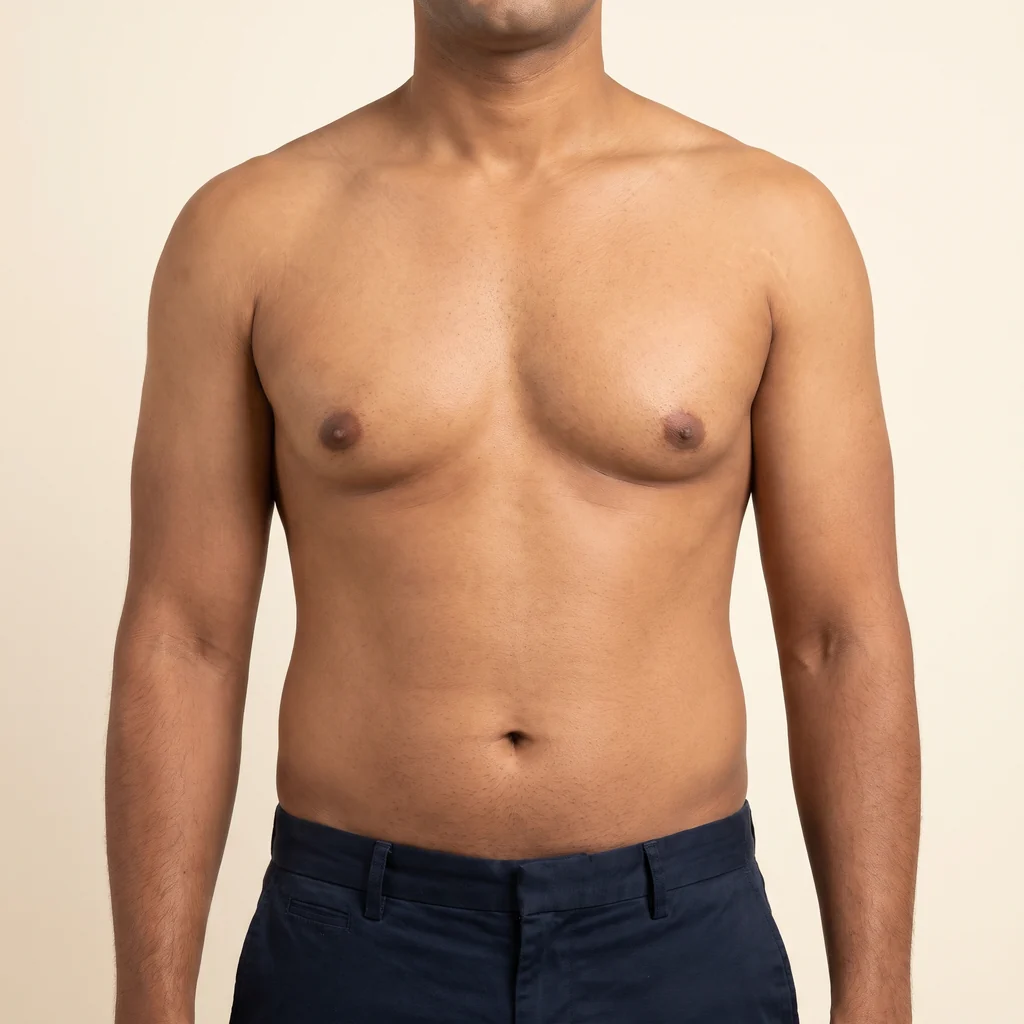
Medical description
Gynaecomastia refers to excessive breast development in men, affecting one or both sides. It may be glandular, fatty (pseudogynaecomastia) or, most often, mixed. It frequently appears during adolescence, sometimes persisting, or later in connection with weight gain, certain medications, anabolic steroid use or a hormonal imbalance. Depending on the case, surgical correction combines liposuction of the fat with removal of the gland, in order to obtain a flatter, better-defined chest. Before any surgery, a medical assessment is often needed to look for a treatable cause. In significant cases with excess skin, skin removal may be necessary. The indication is confirmed by the surgeon after examination.
What the procedure can correct
- Enlarged breasts in men
- Palpable gland behind the areola
- Discomfort wearing fitted clothing
- Asymmetry of the chest
- Puffy or enlarged areolas
The ideal candidate
An adult man, or a young man whose gynaecomastia persists after the end of puberty, in good health and at a stable weight. Medication-related or hormonal causes must have been investigated, and any use of anabolic steroids or cannabis stopped. Elastic skin contributes to a good result, and smoking must be stopped.
The technique
The procedure is performed under general anaesthesia. The surgeon first performs liposuction of the chest through small incisions, then removes the gland through a semi-circular incision at the lower edge of the areola, leaving a thin layer of tissue to avoid a hollow. If there is excess skin, skin removal completes the procedure. A compression vest is worn day and night for several weeks.
Your stay, step by step
- 1
Arrival and consultation
Welcome by your coordinator, examination and pre-operative consultation with the practitioner, who confirms the treatment plan.
- 2
Procedure
General · 1–2 h
- 3
Monitoring in the clinic
Hospital stay: Day case or 1 night. The care team looks after your comfort and post-operative monitoring.
- 4
Check-up before departure
Follow-up visit, care, instructions and prescription before your flight home. Recommended stay: 6–7 days.
- 5
Remote follow-up
Back home, you send your photos and stay in touch with the practitioner through your patient area, for up to 12 months.
Risks and recovery
The usual after-effects include swelling, bruising, a feeling of tightness and moderate pain. Possible complications are haematoma, seroma, infection, contour irregularities, a hollow beneath the areola, asymmetry, changes in nipple sensation and recurrence in the event of weight gain or resumed use of the substances involved. Your surgeon will explain these in detail during the consultation.
The information on this page is provided for guidance only and does not replace a medical consultation. Every procedure carries risks; the indication is made by the practitioner after examination, and results vary from person to person.
Frequently asked questions
Can gynaecomastia come back after the operation?
Recurrence is uncommon when the gland has been removed, but it can occur with significant weight gain, anabolic steroid use or certain medications.
When will I be able to return to weight training?
Light exercise is resumed gradually, but chest workouts are generally postponed for around six weeks. Your surgeon will adapt this timescale to your progress.
Will the scars be visible?
The incisions are short and placed at the edge of the areola or in discreet folds. They generally fade over time, except where skin has been removed, in which case they are longer.