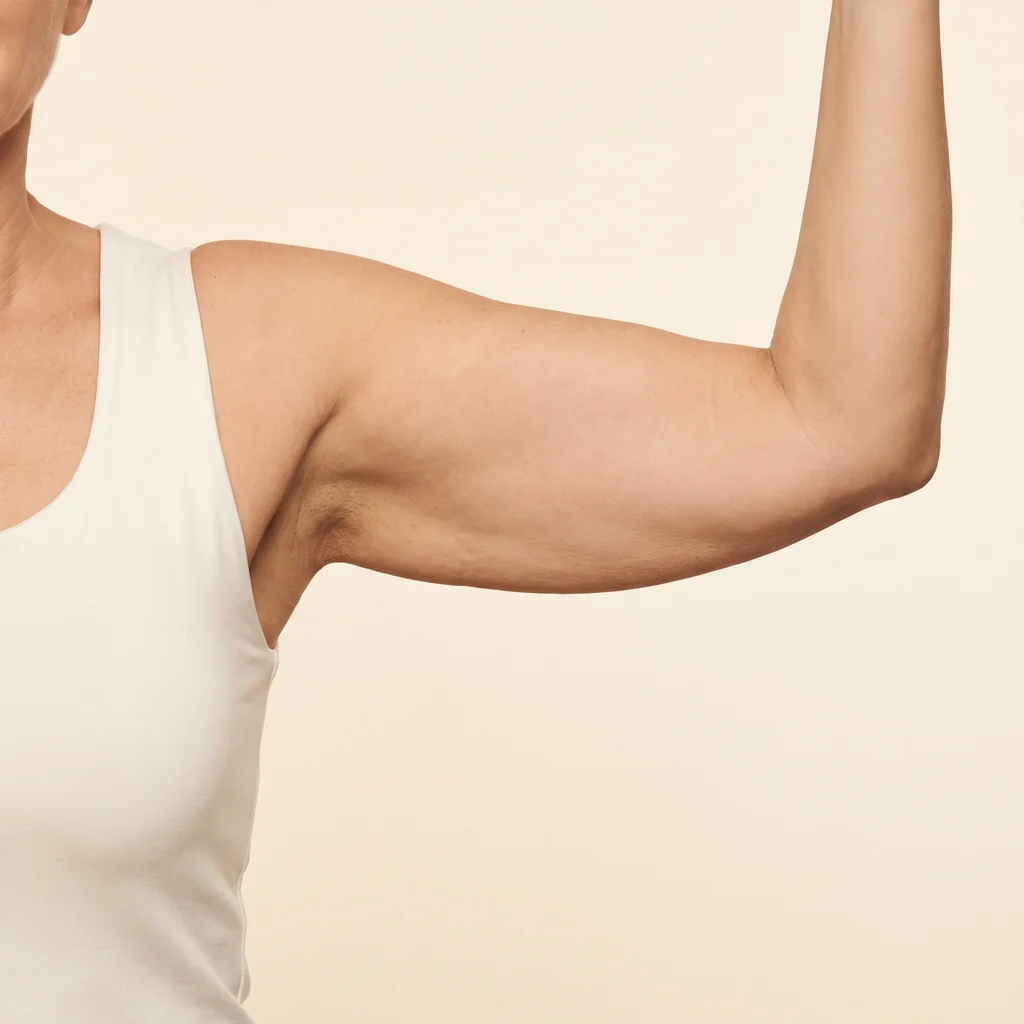
Medical description
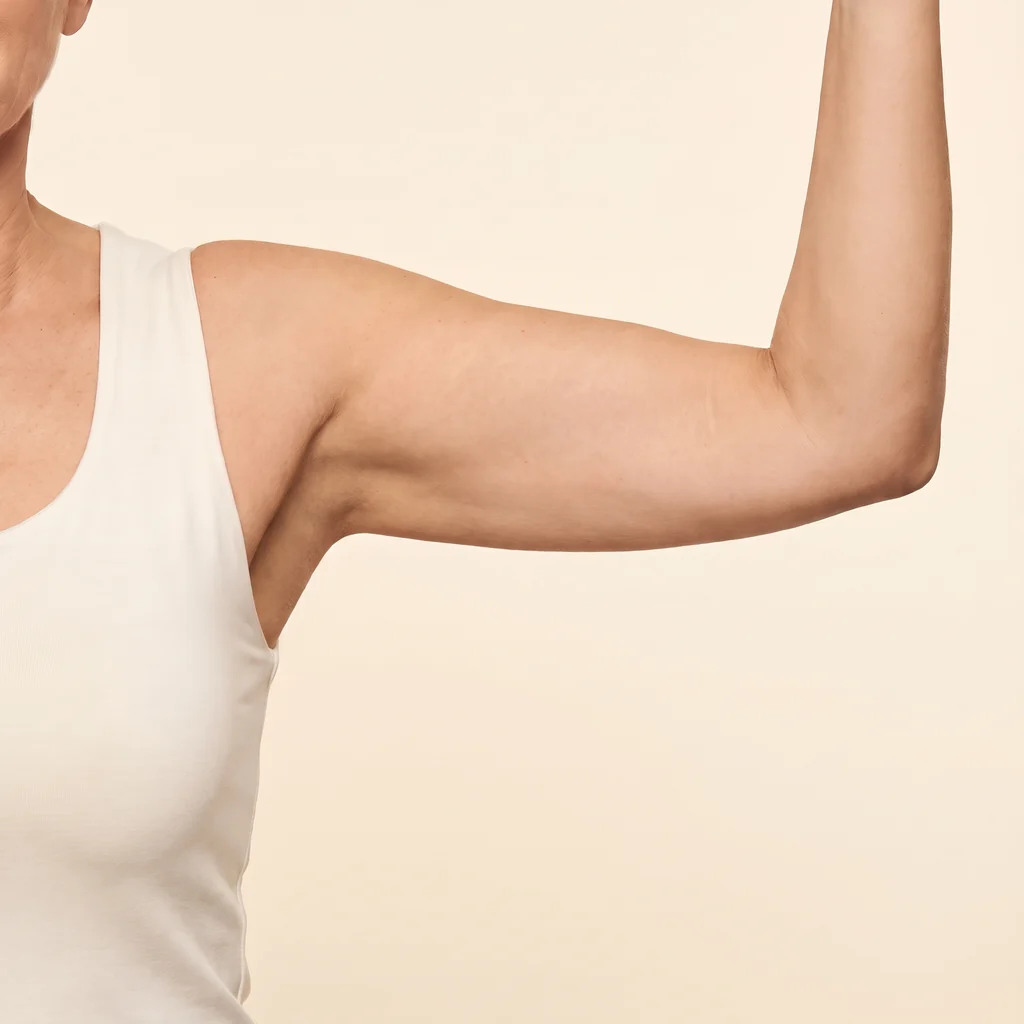
Brachioplasty treats sagging skin on the inner arms, which appears with age or after significant weight loss. It involves removing a spindle-shaped section of skin and fat, then tightening the tissues to give the arm a firmer contour, often with liposuction as well. When the laxity is moderate and the skin of good quality, liposuction alone may be enough; with significant excess skin, however, only brachioplasty can tighten the skin. It leaves a scar along the inner arm, which the surgeon places so as to make it as discreet as possible. The indication is confirmed after examination.
What the procedure can correct
- Flabby skin on the inner arms
- Laxity after major weight loss
- Excess arm fat resistant to exercise
- Self-consciousness about wearing short sleeves
- Rubbing and irritation under the arms
The ideal candidate
A person in good health, at a stable weight, with excess skin on the inner arms and prepared to accept a long scar in exchange for a firmer contour. After weight-loss surgery, it is advisable to wait until the weight has stabilised. Stopping smoking is essential to limit healing problems.
The technique
With the arms held out, the surgeon marks the spindle of skin to be removed. The incision is placed on the inner arm, from the elbow to the armpit, and may extend towards the side of the chest if the excess extends that far; in limited cases, a short incision hidden in the armpit may be enough. Liposuction first refines the area, then the excess is removed and the skin sutured in several layers. The procedure is performed under general anaesthesia, and a compression sleeve is worn for several weeks.
Your stay, step by step
- 1
Arrival and consultation
Welcome by your coordinator, examination and pre-operative consultation with the practitioner, who confirms the treatment plan.
- 2
Procedure
General · 2–3 h
- 3
Monitoring in the clinic
Hospital stay: 1 night. The care team looks after your comfort and post-operative monitoring.
- 4
Check-up before departure
Follow-up visit, care, instructions and prescription before your flight home. Recommended stay: 8–10 days.
- 5
Remote follow-up
Back home, you send your photos and stay in touch with the practitioner through your patient area, for up to 12 months.
Risks and recovery
The usual after-effects include swelling of the arms and sometimes the hands, bruising, a feeling of tightness and difficulty raising the arms in the first few days. Possible complications are haematoma, seroma, infection, wound separation, a widened or thick scar, asymmetry and changes in forearm sensation due to injury to a small cutaneous nerve. Your surgeon will explain these in detail during the consultation.
The information on this page is provided for guidance only and does not replace a medical consultation. Every procedure carries risks; the indication is made by the practitioner after examination, and results vary from person to person.
Frequently asked questions
Will the scar be visible?
The scar is permanent and located on the inner arm, barely visible when the arms are by your sides. It generally takes one to two years to fade, and sun protection is important during this period.
When will I be able to return to sport?
Gentle movements are resumed quickly, but lifting and sports that put strain on the arms are generally postponed for several weeks. Your surgeon will adapt this timescale to your healing.
Can it be combined with other procedures?
Yes, brachioplasty is often performed at the same time as a thigh lift or tummy tuck, particularly after significant weight loss. Feasibility depends on the total operating time and your health.