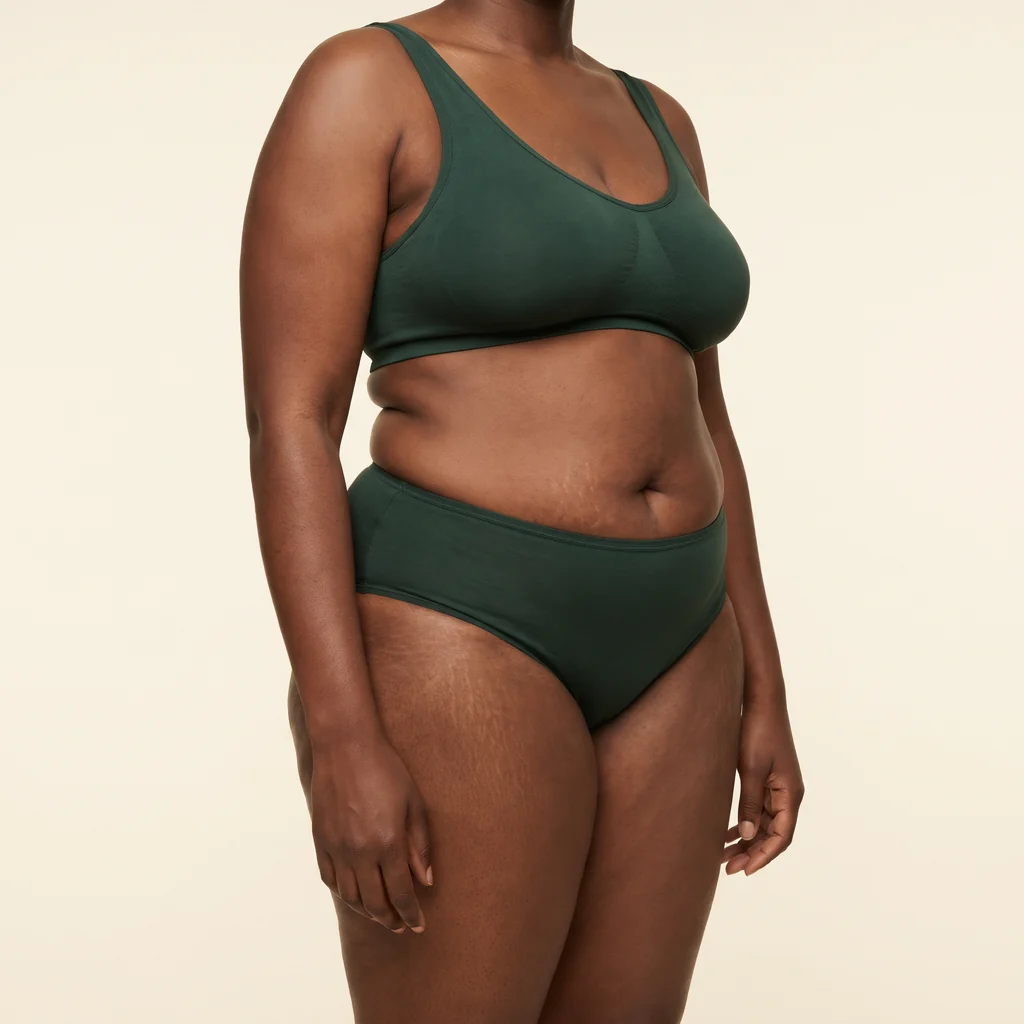
Medical description
The body lift, or circumferential lower body lift, is a procedure intended mainly for people who have lost a great deal of weight, often after weight-loss surgery. It treats, in a single stage, the excess skin all the way around the waist: abdomen, flanks, lower back, buttocks and outer thighs. Unlike a tummy tuck, which only corrects the front, the body lift also lifts the buttocks and thighs. It is major, lengthy surgery that leaves a circumferential scar and requires a significant recovery period; it can be complemented, at a later stage, by other procedures on the arms, breasts or thighs. The indication is confirmed by the surgeon after a full assessment.
What the procedure can correct
- Circumferential excess skin after massive weight loss
- Abdominal apron and sagging flanks
- Sagging, flattened buttocks
- Laxity of the outer thighs
- Skin folds causing irritation and infections
- Difficulty dressing and carrying out activities
The ideal candidate
A person who has lost a significant amount of weight, stable for at least twelve to eighteen months, in good nutritional condition and with no contraindication to a lengthy operation. A full pre-operative assessment is necessary, particularly after bariatric surgery. Stopping smoking completely is imperative, and you must accept an extensive scar as well as a recovery period of several weeks.
The technique
A circumferential incision is made around the trunk, placed low on the abdomen and at the junction between the back and the buttocks, so as to remain beneath swimwear. The surgeon removes the excess skin and fat all the way around, performs a tummy tuck at the front with repositioning of the navel, and lifts the buttocks and thighs upwards; fat grafting or a fat flap can restore volume to the buttocks. The procedure is performed under general anaesthesia, with changes of position on the operating table. Drains are left in for a few days and a compression garment is worn for several weeks.
Your stay, step by step
- 1
Arrival and consultation
Welcome by your coordinator, examination and pre-operative consultation with the practitioner, who confirms the treatment plan.
- 2
Procedure
General · 5–7 h
- 3
Monitoring in the clinic
Hospital stay: 2–4 nights. The care team looks after your comfort and post-operative monitoring.
- 4
Check-up before departure
Follow-up visit, care, instructions and prescription before your flight home. Recommended stay: 14–16 days.
- 5
Remote follow-up
Back home, you send your photos and stay in touch with the practitioner through your patient area, for up to 12 months.
Risks and recovery
The after-effects include pain, significant swelling, bruising and marked fatigue for several weeks. Complications are more common than after more limited surgery: seroma, haematoma, infection, wound separation or delayed healing, skin necrosis, widened or asymmetrical scars, and a risk of venous thrombosis and pulmonary embolism, prevented by anticoagulation and early mobilisation. A blood transfusion or a secondary touch-up may be necessary. Your surgeon will explain these in detail during the consultation.
The information on this page is provided for guidance only and does not replace a medical consultation. Every procedure carries risks; the indication is made by the practitioner after examination, and results vary from person to person.
Frequently asked questions
How long after weight-loss surgery can it be considered?
It is generally advisable to wait until the weight has been stable for at least twelve to eighteen months and any nutritional deficiencies have been corrected. Your surgeon will check these points during the pre-operative assessment.
Can the arms and breasts be treated at the same time?
For safety reasons, these procedures are most often carried out during a second operation, several months later. The surgical plan is drawn up with you during the consultation.
How does the return home work?
The return is planned for the end of the recommended stay, after healing has been checked and the drains removed, and remote follow-up is then arranged. During the flight, compression stockings, good hydration and moving around regularly are recommended.