Medical description
This technique, often called All-on-4, replaces all the teeth in one jaw with a fixed bridge screwed onto four implants. The two front implants are placed upright, while the two back implants are tilted to anchor in the densest bone and, in many cases, limit the need for a bone graft. When the stability of the implants allows, a fixed temporary bridge is fitted shortly after the procedure: this is known as immediate loading. The final bridge is made after osseointegration, which generally involves a second stay. Unlike a single implant, this is a full-arch rehabilitation, more extensive and often carried out under local anaesthesia combined with sedation.
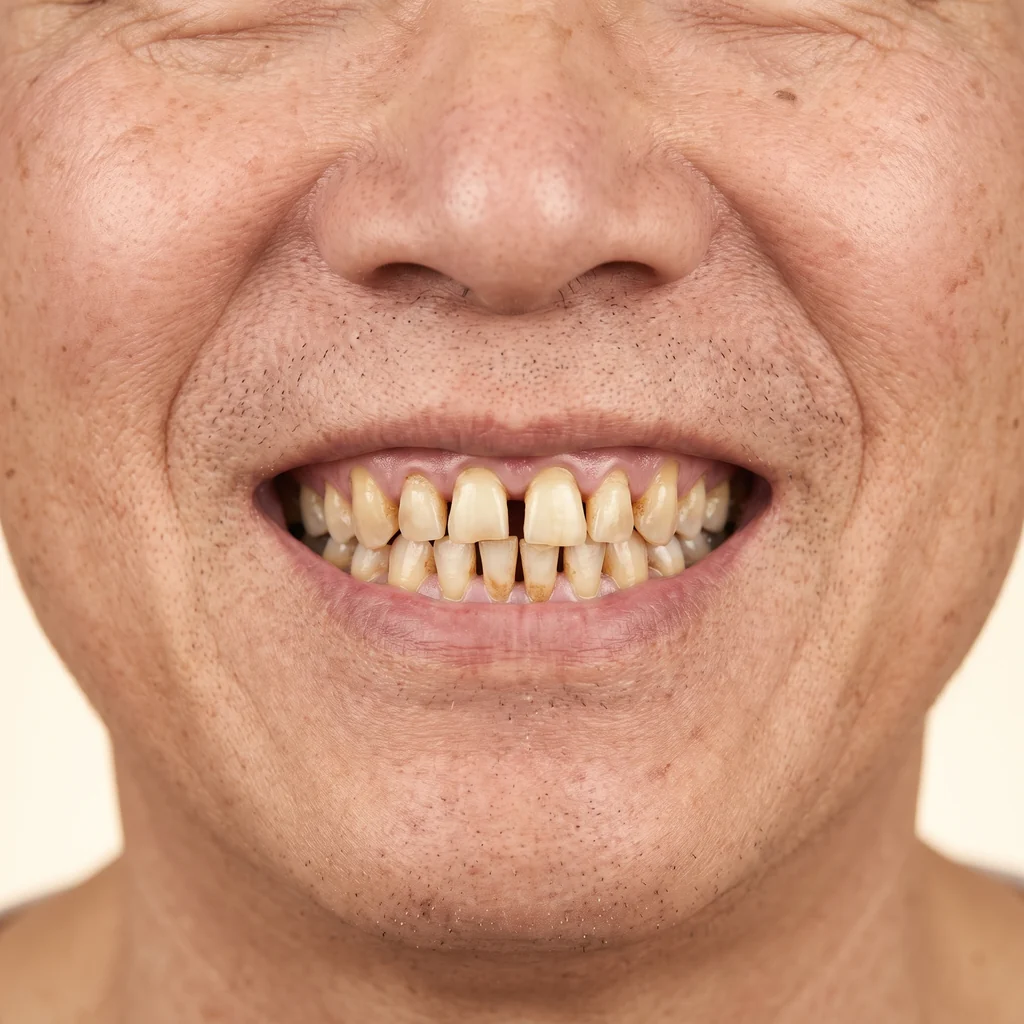
What the procedure can correct
- Loss of all the teeth in one jaw
- Remaining teeth beyond saving due to periodontitis
- Unstable or poorly tolerated removable dentures
- Difficult chewing and a restricted diet
- Loss of support for the lips and face
The ideal candidate
This treatment is intended for adults who have no teeth or whose remaining teeth cannot be saved, with sufficient bone volume for four implants and a state of health compatible with a procedure under sedation. Smoking, poorly controlled diabetes, certain bone treatments and inadequate oral hygiene increase the risk of complications. The indication is confirmed by the dental surgeon after clinical examination and a three-dimensional scan.
The technique
The procedure is planned from a three-dimensional scan. Under local anaesthesia, most often combined with sedation, the practitioner extracts any remaining teeth if necessary, smooths the bone and then places the four implants at precise angles. Abutments are screwed onto the implants, an impression is taken and a fixed temporary bridge is generally fitted within the following days. After osseointegration, the final, stronger bridge is made, tried in and screwed in place during a second stay.
Your stay, step by step
- 1
Arrival and consultation
Welcome by your coordinator, examination and pre-operative consultation with the practitioner, who confirms the treatment plan.
- 2
Procedure
Local with sedation · 3–5 h
- 3
Monitoring in the clinic
Hospital stay: Day case or 1 night. The care team looks after your comfort and post-operative monitoring.
- 4
Check-up before departure
Follow-up visit, care, instructions and prescription before your flight home. Recommended stay: 5–7 days.
- 5
Remote follow-up
Back home, you send your photos and stay in touch with the practitioner through your patient area, for up to 12 months.
Risks and recovery
Marked facial swelling, bruising, pain and discomfort when chewing are usual in the first week, with a soft diet prescribed for several weeks. Possible complications include infection, failure of an implant to integrate, nerve injury causing altered sensation, fracture of the temporary bridge and, in the long term, peri-implantitis, made more likely by inadequate oral hygiene. Your dental surgeon will explain these in detail during the consultation.
The information on this page is provided for guidance only and does not replace a medical consultation. Every procedure carries risks; the indication is made by the practitioner after examination, and results vary from person to person.
Frequently asked questions
Will I go home with fixed teeth?
In most cases, a fixed temporary bridge is fitted before the end of the first stay, if the stability of the implants allows. Your dental surgeon will confirm this at the time of the procedure.
What can I eat after the procedure?
A soft diet is recommended for several weeks to protect the implants while they integrate. Hard or sticky foods are reintroduced gradually, according to the practitioner's instructions.
How do I care for the bridge?
The bridge is cleaned every day with a suitable toothbrush, interdental brushes and often a water flosser. Regular check-ups, with removal and professional cleaning if needed, contribute to the longevity of the implants.