Medical description
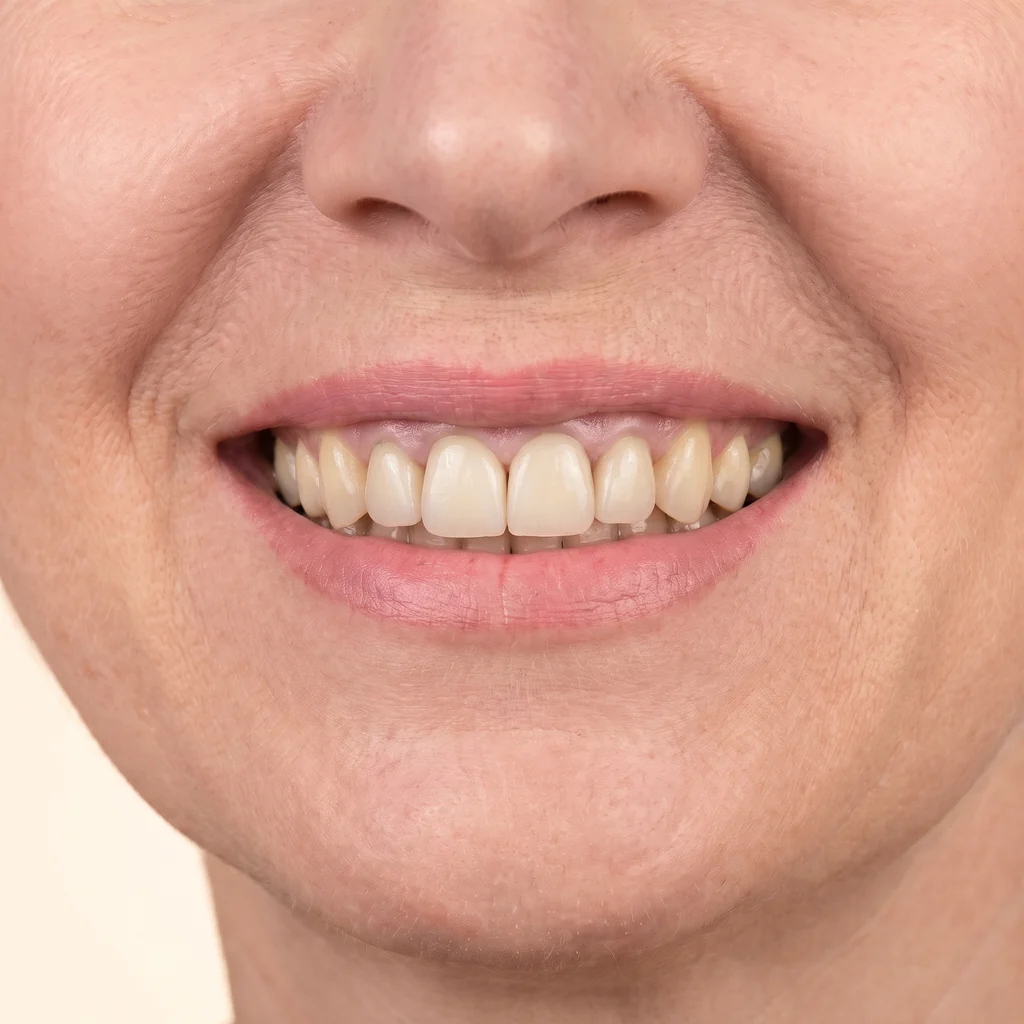
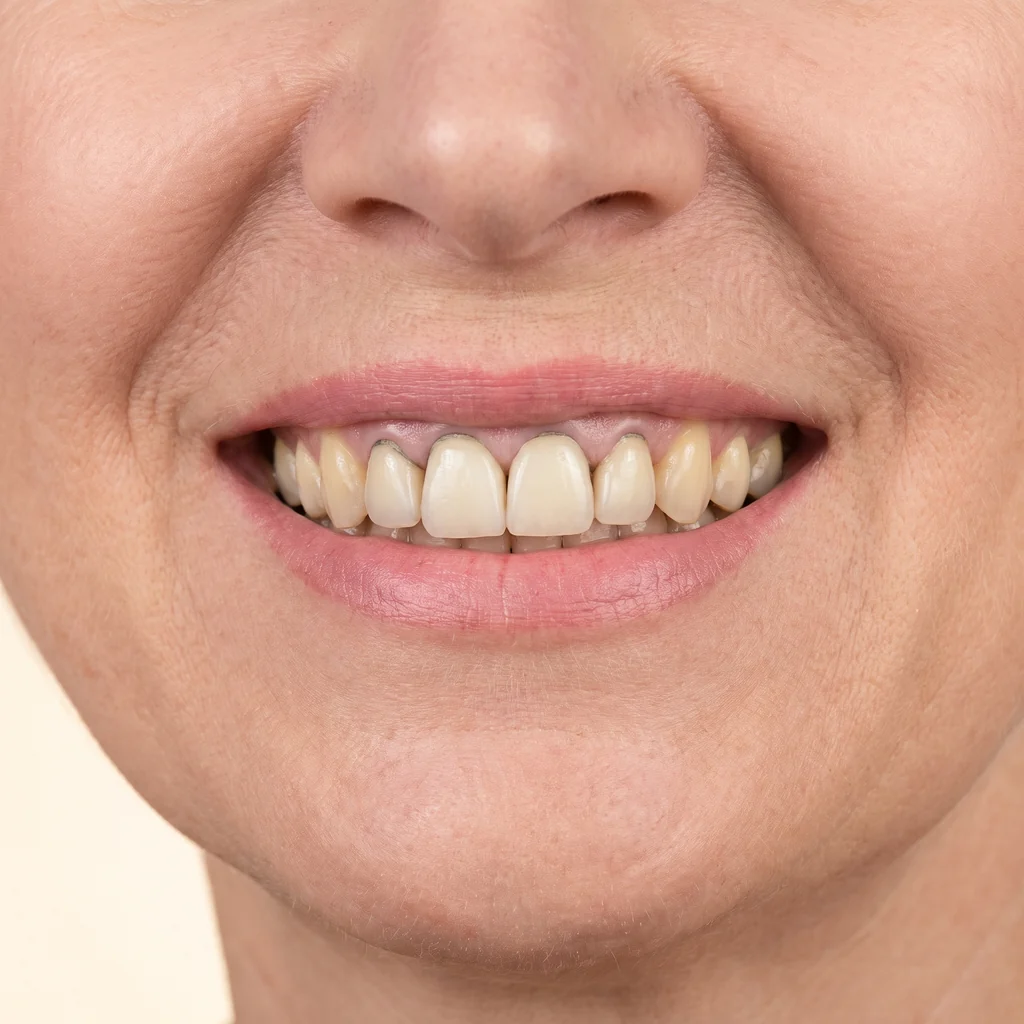
A zirconia crown is a fixed prosthesis that covers the entire visible part of a tooth. Zirconia is a high-strength, metal-free ceramic that is well tolerated by the gums and whose shade can be matched to the neighbouring teeth. Unlike a veneer, which covers only the front surface, a crown is primarily intended to protect and rebuild a damaged tooth: a tooth with extensive decay or large fillings, a root-filled tooth that has become fragile, a fractured tooth or an old crown needing replacement. It can also serve as an abutment for a bridge or be attached to an implant. Fitting it requires more extensive preparation of the tooth, which is why it is reserved for teeth that genuinely need it.
What the procedure can correct
- Fractured or badly damaged tooth
- Root-filled tooth that has become fragile
- Old metal or unsightly crowns
- Grey line along the gum
- Replacing a tooth with a bridge
- Restoring a tooth on an implant
The ideal candidate
A crown is suitable for adults with one or more teeth too damaged for a simple filling or veneer, with a healthy root and gums. Any infection, decay or gum disease must be treated before fitting. Your dentist confirms the indication after clinical and X-ray examination and checks that the tooth can be saved.
The technique
Under local anaesthesia, the dentist treats the tooth if necessary, then shapes it around its entire circumference to make room for the thickness of the crown. A conventional or digital impression is taken, the shade is chosen and a temporary crown is fitted. The final crown, made in the laboratory using computer-aided design and milling, is then tried in, adjusted to the bite and cemented or bonded.
Your stay, step by step
- 1
Arrival and consultation
Welcome by your coordinator, examination and pre-operative consultation with the practitioner, who confirms the treatment plan.
- 2
Procedure
Local · 1–3 h
- 3
Back to the hotel
Day-case treatment: you return to your hotel the same day, accompanied.
- 4
Check-up before departure
Follow-up visit, care, instructions and prescription before your flight home. Recommended stay: 5–7 days.
- 5
Remote follow-up
Back home, you send your photos and stay in touch with the practitioner through your patient area, for up to 12 months.
Risks and recovery
Tooth sensitivity and moderate gum discomfort are usual for a few days after preparation. The crown may come loose, the ceramic may fracture, the opposing tooth may wear, the gum may recede or become inflamed and, on a living tooth, the nerve may be affected, requiring root canal treatment. Your dentist will explain these in detail during the consultation.
The information on this page is provided for guidance only and does not replace a medical consultation. Every procedure carries risks; the indication is made by the practitioner after examination, and results vary from person to person.
Frequently asked questions
What is the difference between a crown and a veneer?
A veneer covers only the visible surface of a tooth that is healthy overall, whereas a crown encases the whole tooth to protect it. A crown therefore requires more extensive preparation and is reserved for weakened teeth.
Can I fly straight after the crowns are fitted?
Having crowns fitted does not generally prevent you from travelling. Before you leave, the dentist checks the fit and your bite, and follow-up can then be arranged remotely.
Can a zirconia crown become discoloured?
Zirconia is a stable material that does not stain like a resin. The gum and the neighbouring natural teeth may, however, change over time, hence the importance of careful oral hygiene and regular check-ups.