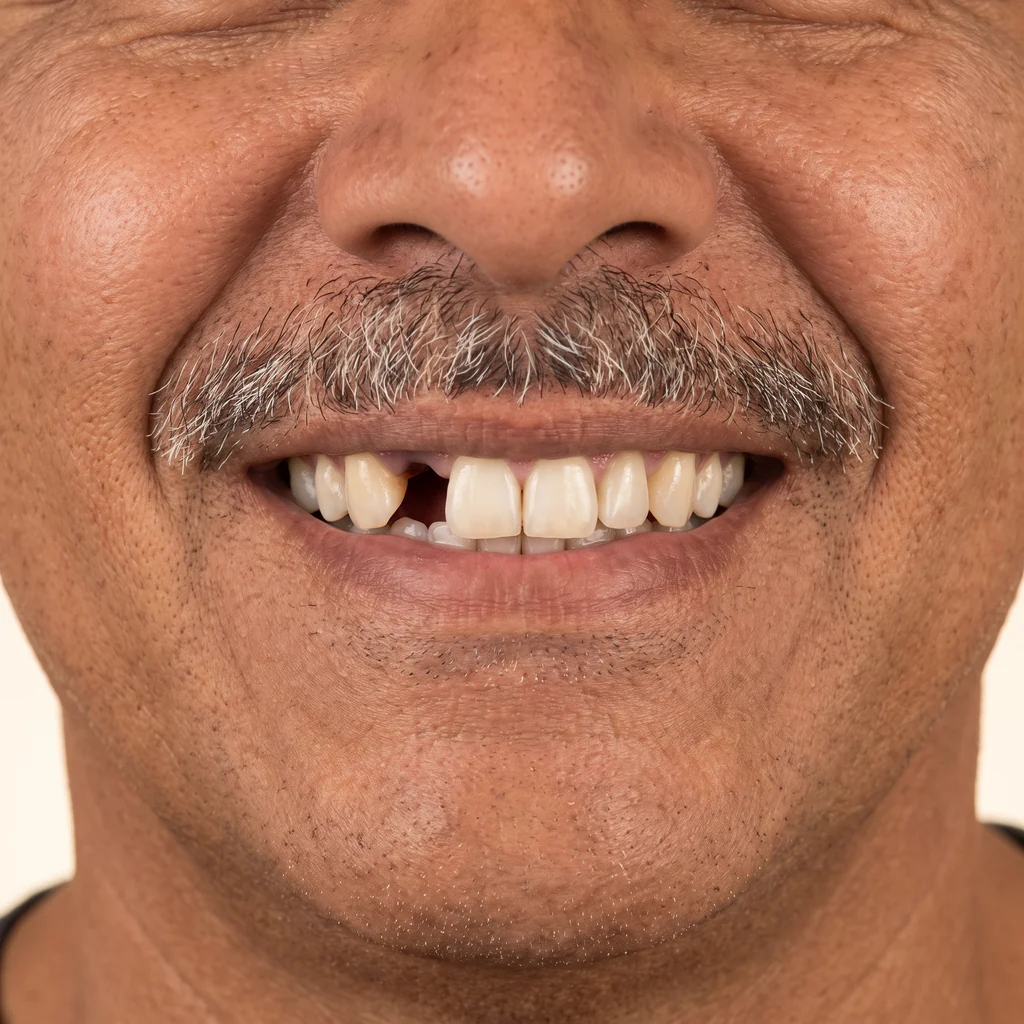
Medical description
A dental implant is a small screw, usually made of titanium, inserted into the jawbone to replace the root of a missing tooth. It then supports a crown, a bridge or a denture, without the need to reshape the neighbouring teeth. Treatment takes place in two stages: surgical placement of the implant, then, after an osseointegration period of several months during which the bone fuses with the implant, fabrication of the final prosthesis. This waiting period explains why the treatment often involves two separate stays. When bone volume is insufficient, a bone graft or sinus lift may be needed beforehand, which extends the timeline.
What the procedure can correct
- One or more missing teeth
- Uncomfortable bridge or removable denture
- Difficulty chewing certain foods
- Unsightly gap in the smile
- Preserving healthy neighbouring teeth
The ideal candidate
An implant is suitable for adults whose bone growth is complete, in good general health, with sufficient or rebuildable bone volume and good oral hygiene. Smoking, poorly controlled diabetes, untreated gum disease and certain treatments such as bisphosphonates or radiotherapy to the area increase the risk of failure and must be reported. Your dentist or dental surgeon confirms the indication after clinical examination and three-dimensional imaging.
The technique
The assessment is based on a CT or cone beam scan that measures the available bone and allows the position of the implant to be planned. Under local anaesthesia, the practitioner opens the gum or goes directly through it, prepares a site in the bone and inserts the implant, covered with a healing cap, before closing with a few stitches. After osseointegration, an abutment is screwed onto the implant and the final crown is made from an impression. A temporary tooth can sometimes be fitted in the meantime to preserve the appearance.
Your stay, step by step
- 1
Arrival and consultation
Welcome by your coordinator, examination and pre-operative consultation with the practitioner, who confirms the treatment plan.
- 2
Procedure
Local · 0.5–1.5 h
- 3
Back to the hotel
Day-case treatment: you return to your hotel the same day, accompanied.
- 4
Check-up before departure
Follow-up visit, care, instructions and prescription before your flight home. Recommended stay: 4–6 days.
- 5
Remote follow-up
Back home, you send your photos and stay in touch with the practitioner through your patient area, for up to 12 months.
Risks and recovery
Swelling, small bruises and moderate pain are usual for a few days and are relieved by painkillers and cold compresses. Possible complications include infection, failure of osseointegration leading to loss of the implant, nerve injury causing altered sensation in the lip or chin, an opening into the sinus and, in the long term, inflammation around the implant known as peri-implantitis. Your dentist will explain these in detail during the consultation.
The information on this page is provided for guidance only and does not replace a medical consultation. Every procedure carries risks; the indication is made by the practitioner after examination, and results vary from person to person.
Frequently asked questions
Why are two stays needed?
The bone needs several months to fuse with the implant before it can support a final crown. The first stay is devoted to placing the implant, the second to making and fitting the prosthesis.
Can I fly after the implant is placed?
After a straightforward placement, the return journey is generally possible at the end of the recommended stay. In the case of a bone graft or sinus lift, your dentist may recommend waiting before flying and taking particular precautions, such as avoiding blowing your nose hard.
Does an implant last a lifetime?
A well-integrated implant can last many years, but its lifespan depends on oral hygiene, not smoking and regular check-ups. The crown it supports may, however, need to be replaced over time.