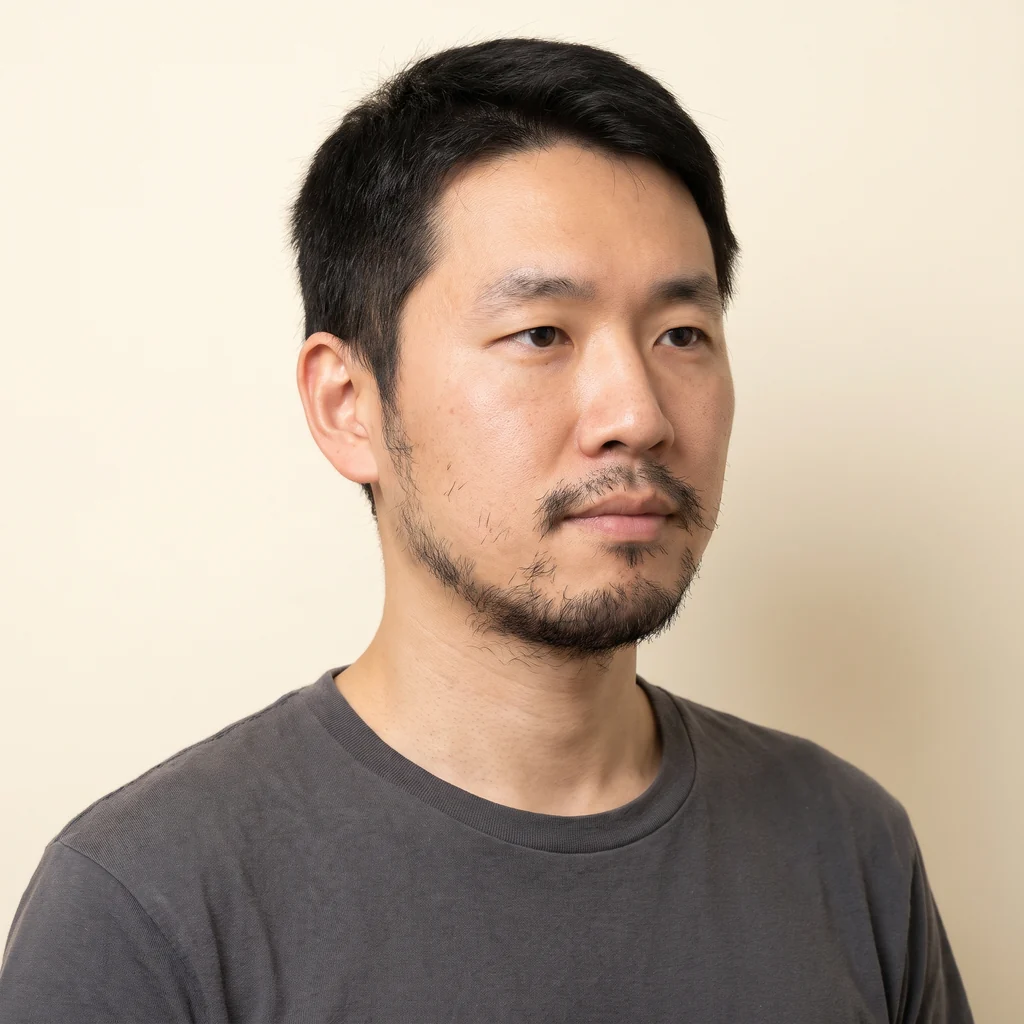
Medical description
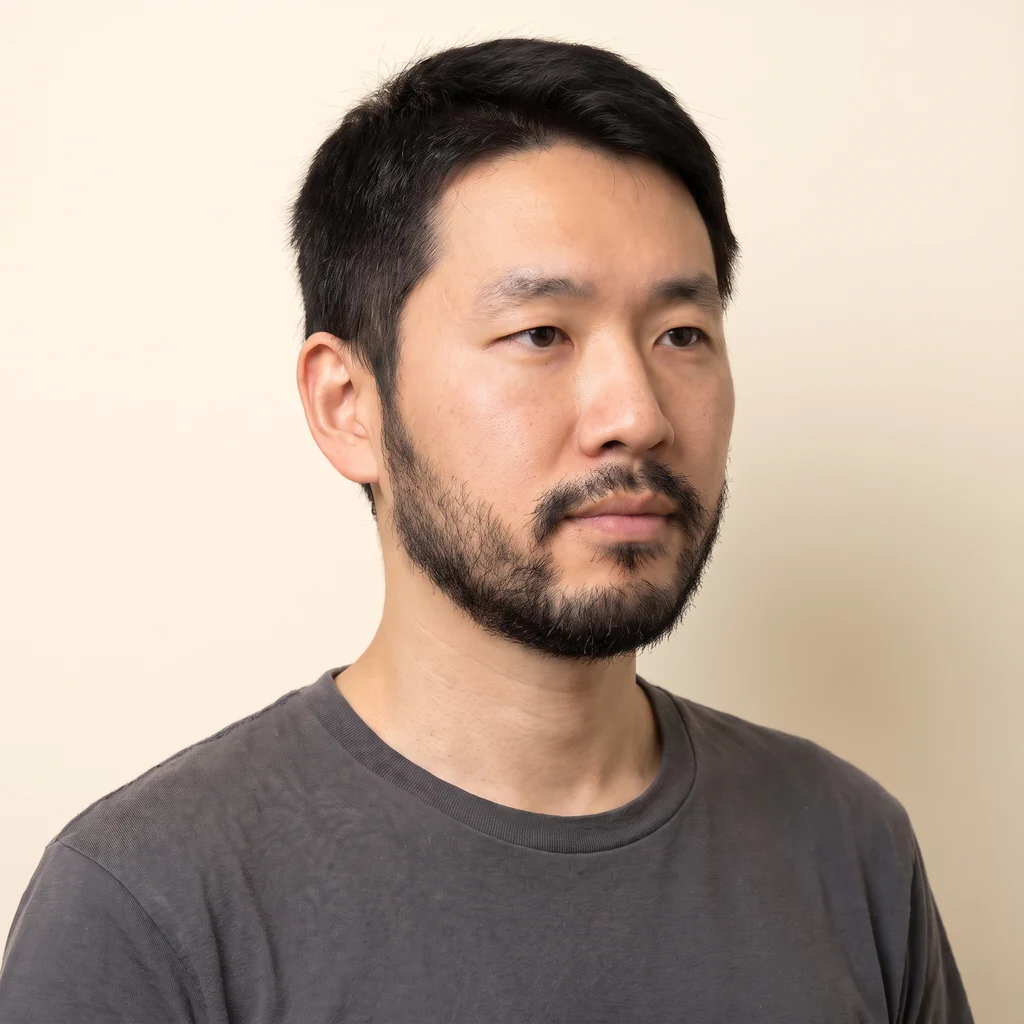
A beard transplant involves harvesting follicular units, most often from the back of the head, to implant them into sparse areas of the beard or moustache. It uses the same harvesting principles as FUE, with implantation adapted to the face: mostly one- or two-hair grafts, a very flat angle and a direction that varies between the cheeks, chin and moustache. The transplanted hairs retain the characteristics of the original scalp hair, but generally blend in well with the beard and can be shaved. As the donor area is limited, the number of grafts devoted to the beard must be considered in light of any future hair transplant. The indication is confirmed by the doctor after examination.
What the procedure can correct
- Sparse or thin beard
- Bare patches on the cheeks or chin
- Thin moustache
- Asymmetrical beard
- Hairless facial scars
- Beard outline to be redesigned
The ideal candidate
An adult man whose facial hair is fully established, often after the age of twenty-five, and who has a sufficient donor area. People with alopecia areata of the beard or an active skin condition of the face are not good candidates. If baldness is present or likely to progress, the balance between beard and scalp should be discussed with the doctor.
The technique
The grafts are harvested from the back of the head using a micro-punch, favouring one- or two-hair units. The beard design is drawn up with you, then the grafts are implanted one by one, after opening micro-channels or directly with an implanter, at a very acute angle that reproduces natural growth. The procedure is performed under local anaesthesia. No dressing is needed on the face, and simple local care is prescribed for the first few days.
Your stay, step by step
- 1
Arrival and consultation
Welcome by your coordinator, examination and pre-operative consultation with the practitioner, who confirms the treatment plan.
- 2
Procedure
Local · 4–7 h
- 3
Back to the hotel
Day-case treatment: you return to your hotel the same day, accompanied.
- 4
Check-up before departure
Follow-up visit, care, instructions and prescription before your flight home. Recommended stay: 3–4 days.
- 5
Remote follow-up
Back home, you send your photos and stay in touch with the practitioner through your patient area, for up to 12 months.
Risks and recovery
The usual after-effects include moderate facial swelling, redness and small scabs around the grafts for a few days, as well as tenderness of the donor area. The transplanted hairs fall out temporarily in the following weeks (shock loss) before gradually growing back. Folliculitis, infection, ingrown hairs, density or orientation below expectations, or small pinpoint marks may occur. Your surgeon will explain these in detail during the consultation.
The information on this page is provided for guidance only and does not replace a medical consultation. Every procedure carries risks; the indication is made by the practitioner after examination, and results vary from person to person.
Frequently asked questions
Will I be able to shave after the transplant?
You should avoid shaving or trimming the beard during the first few weeks, while the grafts become firmly anchored. Once regrowth is established, the transplanted hairs can be shaved and trimmed like the rest of the beard.
Will the transplanted hairs look like my beard?
They come from the scalp and may be slightly finer or softer. Their careful orientation and the choice of one- or two-hair grafts generally allow them to blend in naturally.
Does a beard transplant reduce my reserves for a hair transplant?
Yes, the grafts generally come from the same donor area, whose supply is limited. The doctor takes this into account if a hair transplant is being considered or might be in the future.