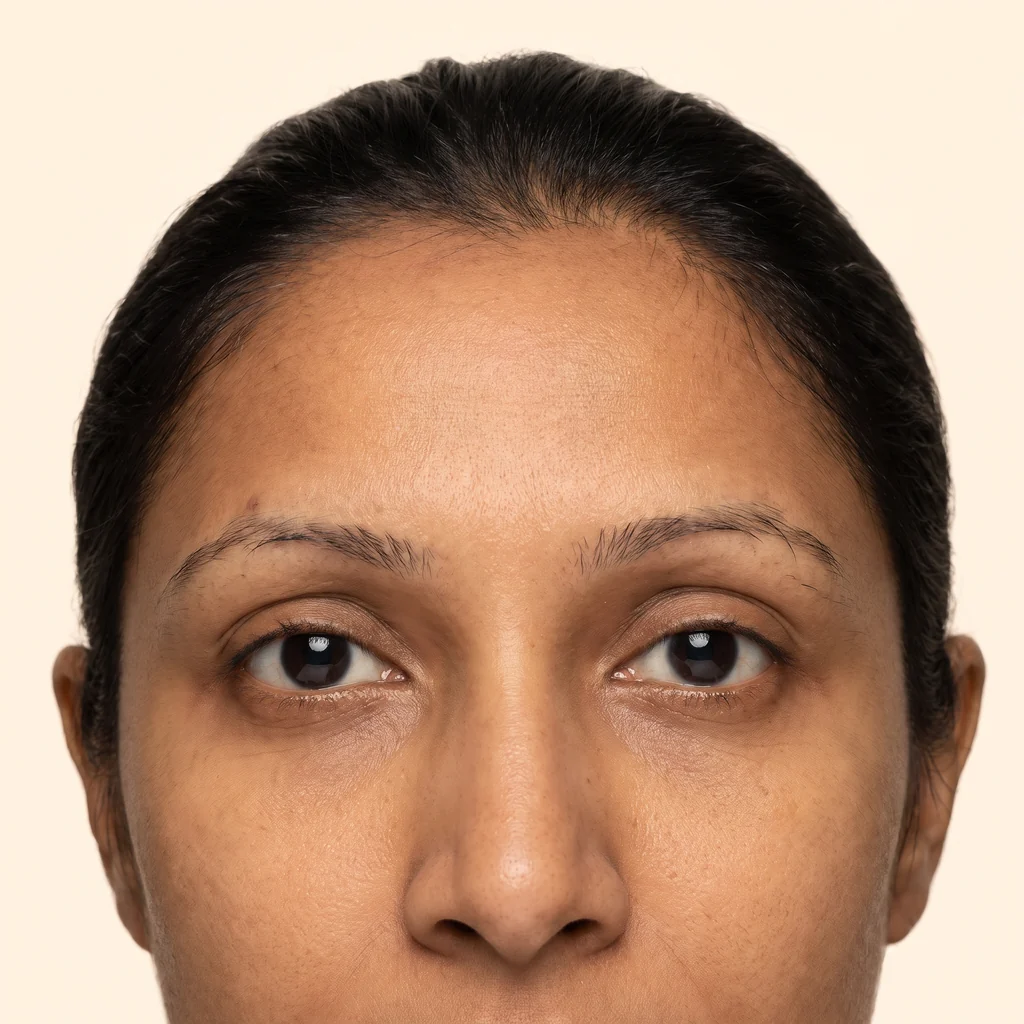
Medical description
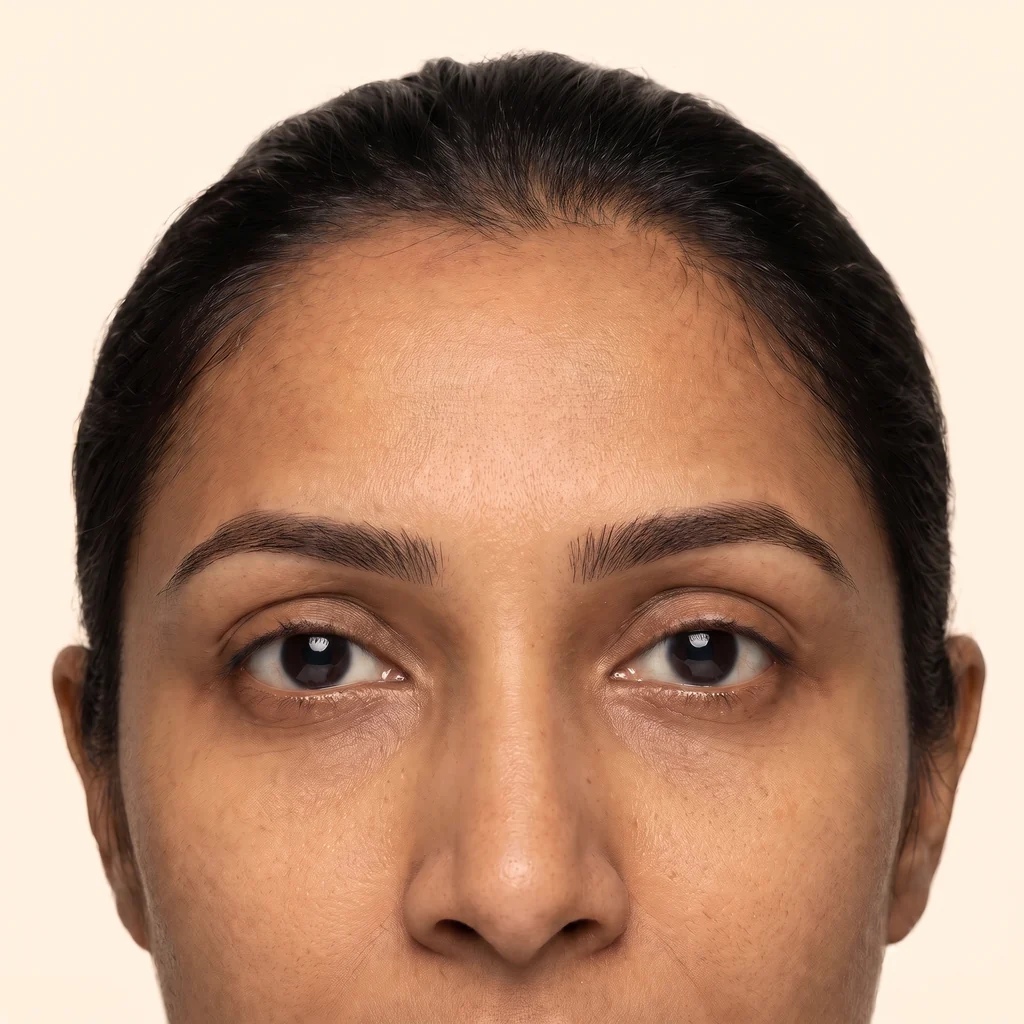
An eyebrow transplant involves harvesting a small number of follicular units, generally from the back of the head, then implanting them into the eyebrows in a very precise orientation. It is a small-area but demanding transplant: eyebrow hairs lie very flat and change direction between the head, body and tail of the eyebrow, hence the almost exclusive use of single-hair grafts. The transplanted hairs retain the characteristics of scalp hair, notably continuous growth, and must therefore be trimmed regularly. Unlike permanent make-up, this technique provides real hairs. The indication is confirmed by the doctor after examination, taking into account the cause of the loss.
What the procedure can correct
- Sparse or overly thin eyebrows
- Over-plucked eyebrows
- Partial absence of eyebrows
- Scars in the eyebrow
- Asymmetry between the two eyebrows
- Eyebrow shape to be redesigned
The ideal candidate
A person in good health whose eyebrow loss is stable, caused for example by repeated plucking, a scar or a natural characteristic. Loss linked to an active condition, such as alopecia areata, a poorly controlled thyroid disorder or certain skin diseases, must first be investigated and treated. You must accept regular maintenance of the transplanted hairs, which grow longer than natural eyebrows.
The technique
The eyebrow design is drawn up with you before the procedure, according to the shape of your face. A limited number of single-hair grafts is harvested from the back of the head by micro-punch, generally without extensive shaving, then implanted one by one, after making micro-incisions or using an implanter, at a very flat angle that follows the anatomy of the eyebrow. The procedure is performed under local anaesthesia. No dressing is applied to the eyebrows, and simple local care is prescribed.
Your stay, step by step
- 1
Arrival and consultation
Welcome by your coordinator, examination and pre-operative consultation with the practitioner, who confirms the treatment plan.
- 2
Procedure
Local · 2–4 h
- 3
Back to the hotel
Day-case treatment: you return to your hotel the same day, accompanied.
- 4
Check-up before departure
Follow-up visit, care, instructions and prescription before your flight home. Recommended stay: 2–3 days.
- 5
Remote follow-up
Back home, you send your photos and stay in touch with the practitioner through your patient area, for up to 12 months.
Risks and recovery
The usual after-effects include slight swelling of the eyelids, redness and small scabs for a few days, as well as minimal tenderness of the donor area. The transplanted hairs fall out temporarily in the following weeks (shock loss) before growing back. Folliculitis, infection, imperfect orientation of the hairs, lower density than expected or asymmetry that may require a touch-up may occur. Your surgeon will explain these in detail during the consultation.
The information on this page is provided for guidance only and does not replace a medical consultation. Every procedure carries risks; the indication is made by the practitioner after examination, and results vary from person to person.
Frequently asked questions
Will I have to trim my transplanted eyebrows?
Yes, the transplanted hairs come from the scalp and keep a longer growth cycle than natural eyebrows. Regular trimming is necessary to maintain a harmonious shape.
Can I wear make-up after the transplant?
It is recommended not to apply make-up to the eyebrows during the first few days, while the scabs fall off and the grafts become firmly anchored. The doctor will tell you the appropriate timescale.
Will the result look natural?
Using single-hair grafts and respecting the angle and direction of growth aim to achieve a natural result. The result develops gradually after regrowth and can be touched up if necessary.