Medical description
FUE (Follicular Unit Extraction) is a hair transplant technique that involves individually harvesting follicular units, groups of one to four hairs, from the donor area at the back and sides of the head, where the hair is genetically resistant to loss. These grafts are then implanted into incisions made in the thinning areas. In classic FUE, these recipient incisions are made with fine steel blades or needles, and the grafts are then placed with forceps. The donor area is limited and does not regenerate: the number of grafts available over a lifetime is therefore finite. The number of grafts is determined by the doctor after examining the scalp.
What the procedure can correct
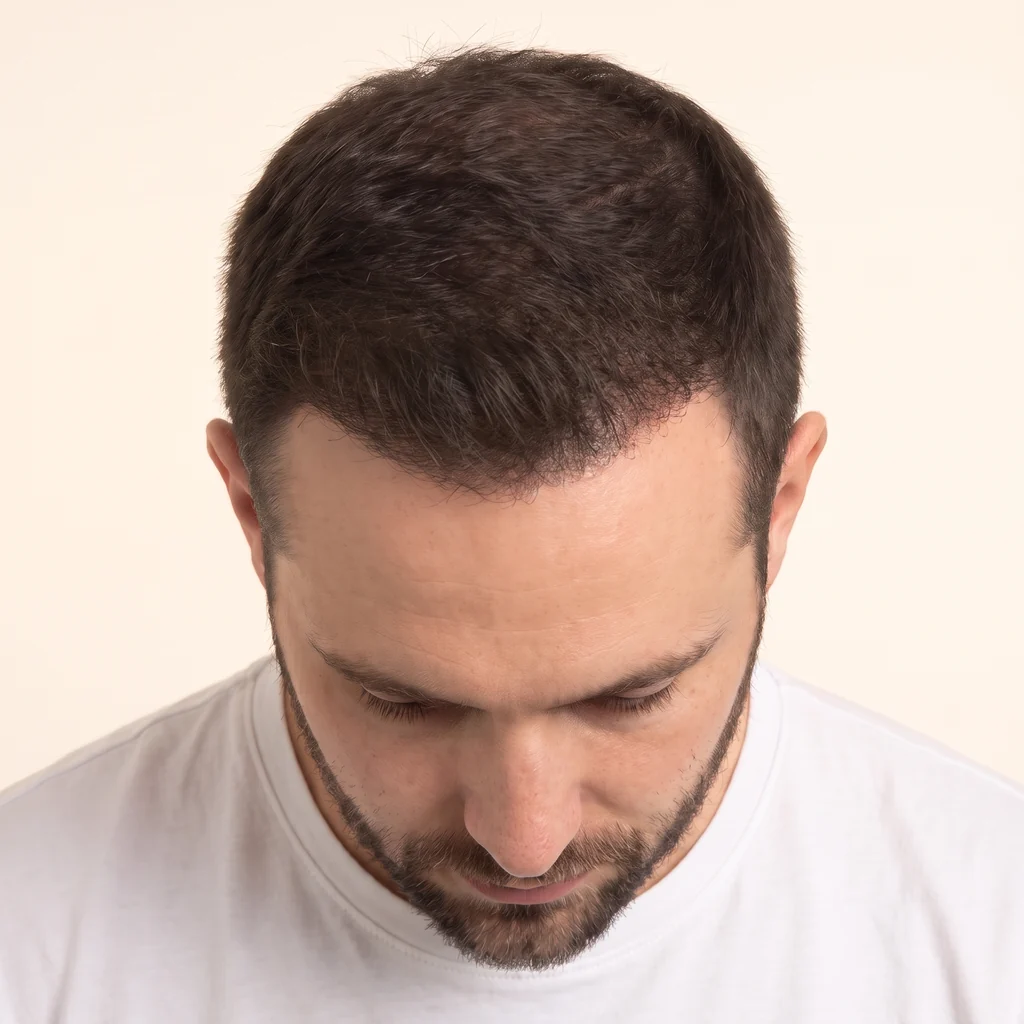
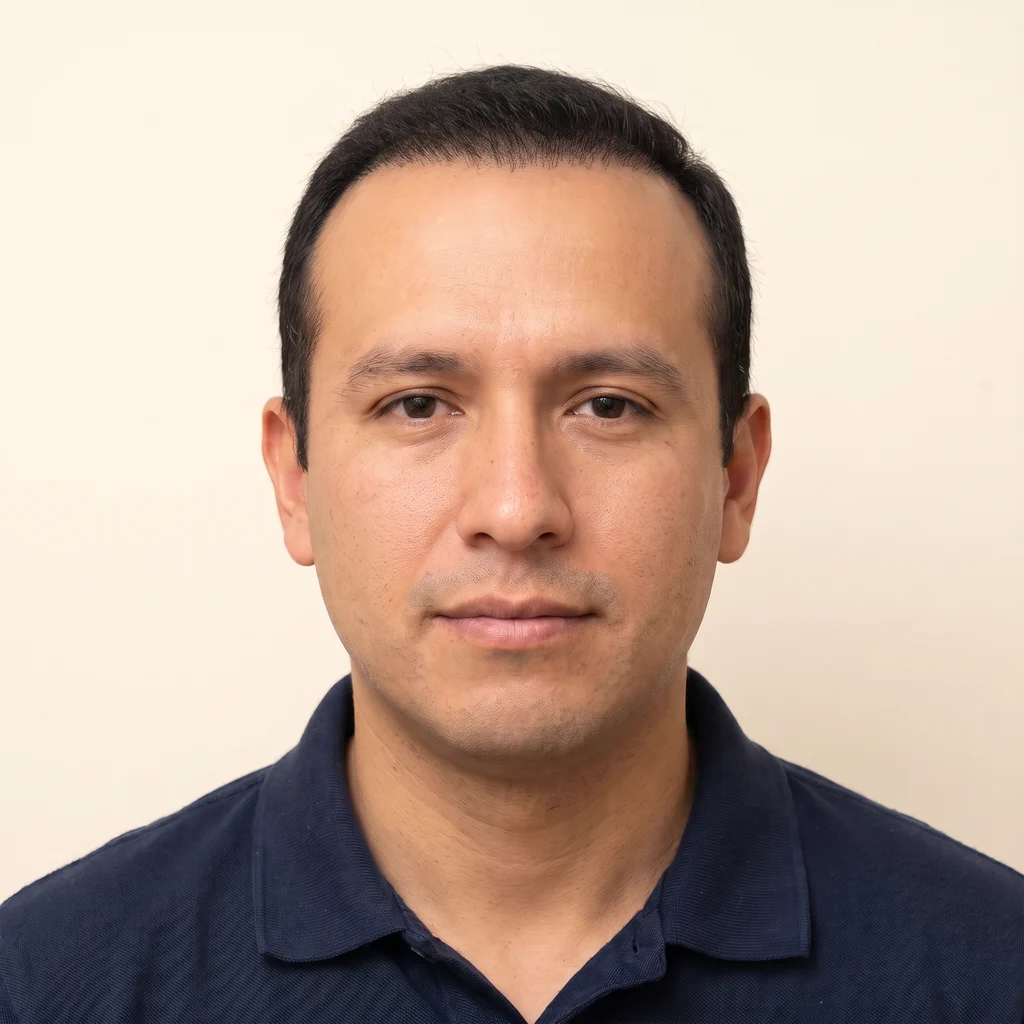
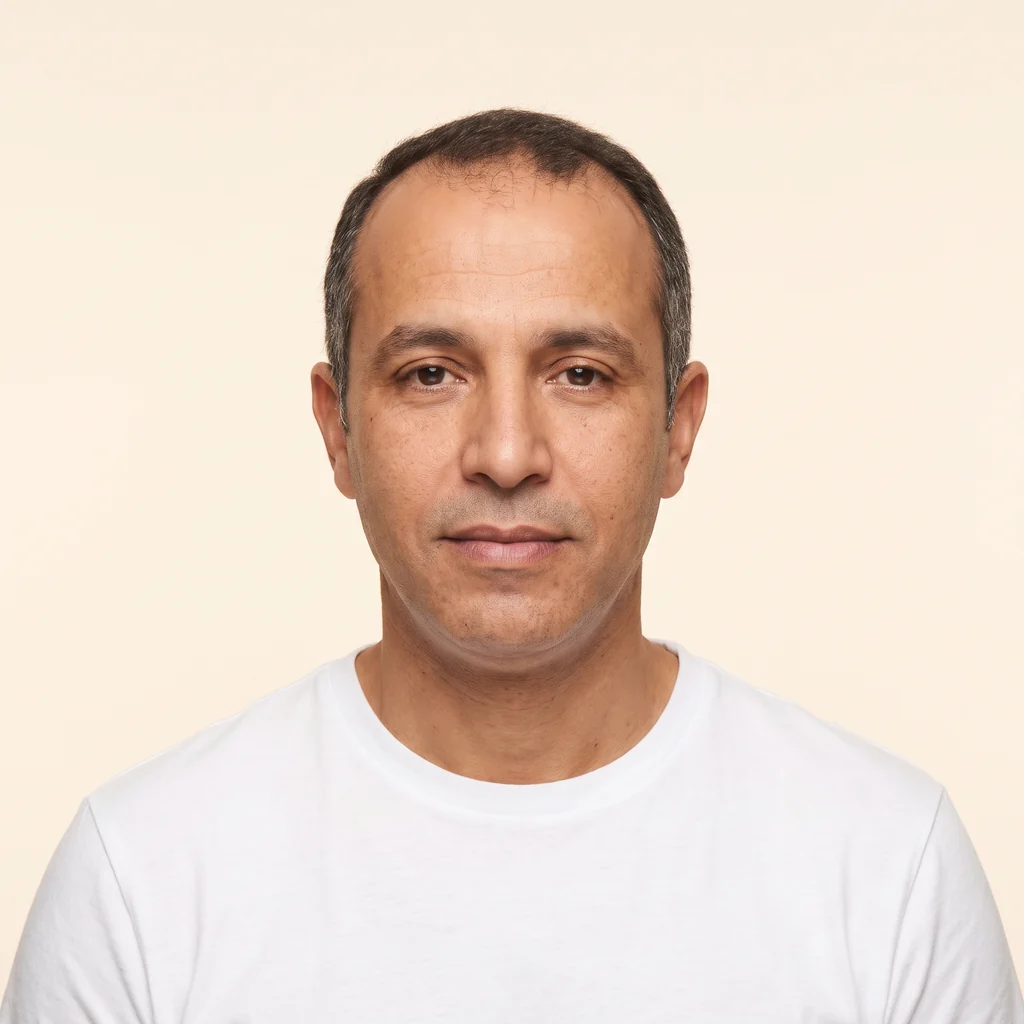
- Receding temples
- Receding hairline
- Baldness on the crown (vertex)
- Loss of density on top of the head
- Hairless scars on the scalp
The ideal candidate
A person whose hair loss has sufficiently stabilised and who has a donor area of good density. In young patients, whose hair loss is likely to progress, the indication is made with caution and medical treatment for hair loss may be recommended to preserve the existing hair. FUE is not suitable in cases of active alopecia areata or progressive scarring alopecia, and expectations must take into account the limits of the donor area.
The technique
The donor area is generally shaved, then the follicular units are harvested one by one using a manual or motorised micro-punch of less than one millimetre. The grafts are sorted and stored in a suitable solution while the doctor makes the recipient incisions with steel micro-blades, respecting the natural angle and direction of the hair, and the grafts are then implanted one by one with forceps. The procedure is performed under local anaesthesia. A bandage is placed on the donor area for the first night.
Your stay, step by step
- 1
Arrival and consultation
Welcome by your coordinator, examination and pre-operative consultation with the practitioner, who confirms the treatment plan.
- 2
Procedure
Local · 6–8 h
- 3
Back to the hotel
Day-case treatment: you return to your hotel the same day, accompanied.
- 4
Check-up before departure
Follow-up visit, care, instructions and prescription before your flight home. Recommended stay: 3–4 days.
- 5
Remote follow-up
Back home, you send your photos and stay in touch with the practitioner through your patient area, for up to 12 months.
Risks and recovery
The usual after-effects include swelling of the forehead, which may move down towards the eyes for a few days, small scabs on the grafted areas, redness and tenderness of the donor area. In the following weeks, the transplanted hairs fall out temporarily (shock loss) before gradually growing back, and temporary loss of neighbouring native hair is also possible. Complications may occur: folliculitis, infection, numbness of the scalp, lower density than expected or a sparse appearance of the donor area if overharvested. Your surgeon will explain these in detail during the consultation.
The information on this page is provided for guidance only and does not replace a medical consultation. Every procedure carries risks; the indication is made by the practitioner after examination, and results vary from person to person.
Frequently asked questions
Will the transplanted hair fall out?
Yes, most of the transplanted hairs fall out in the weeks following the transplant: this is a normal phenomenon known as shock loss. The follicles remain in place and produce new hair from around the third or fourth month.
Do I need to follow a treatment after the transplant?
Transplanted hair is generally resistant to loss, but native hair may continue to fall out if the hair loss progresses. Medical treatment may then be offered by the doctor to preserve it and maintain harmonious density.
When will I be able to fly and return to work?
The return flight is possible at the end of the short stay, after the first wash and the check-up. Office work can often be resumed quickly, avoiding direct sun, intense sport and tight headwear according to the instructions you are given.