


Medical description
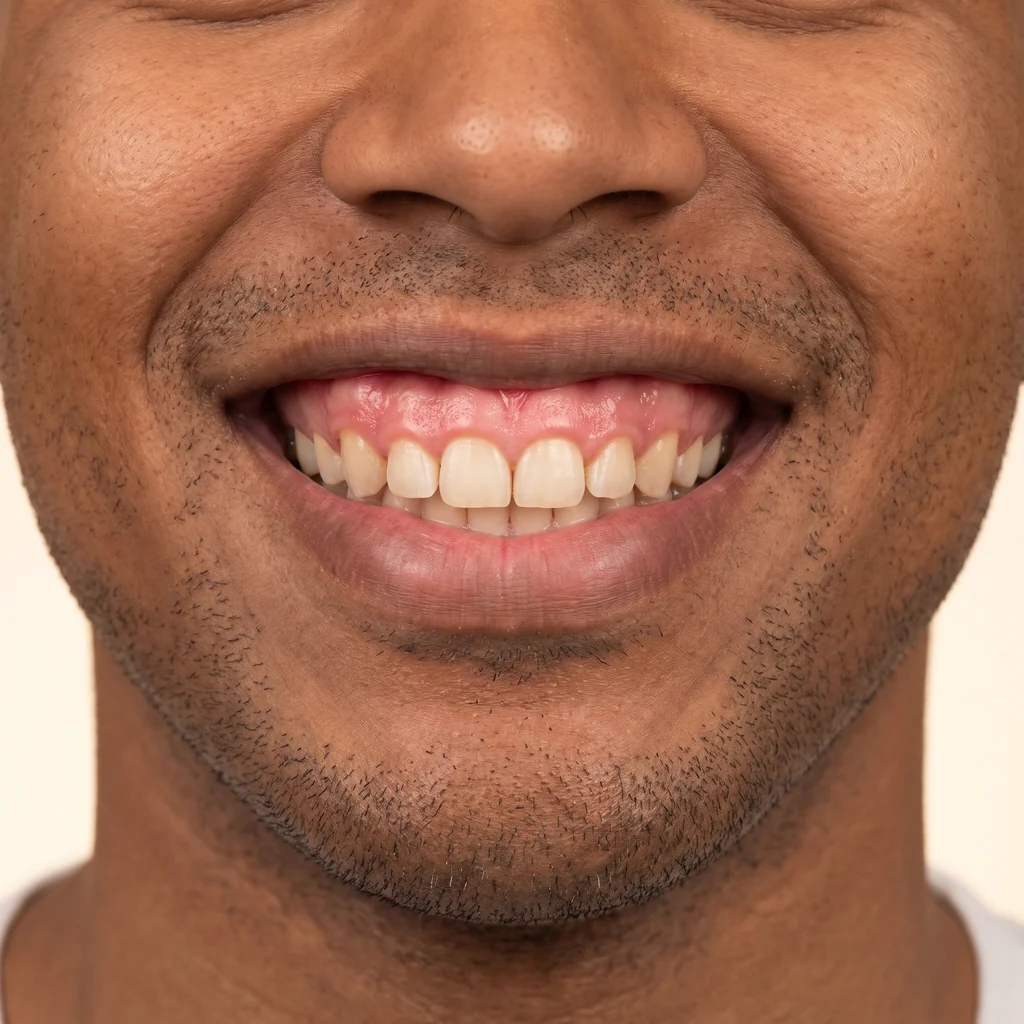
Gingivectomy, or gingivoplasty, involves removing and reshaping part of the gum that covers too much of the teeth. In particular, it corrects a gummy smile, when a lot of gum shows on smiling and the teeth look short. It can also even out the gum line between the teeth, or prepare for the placement of veneers or crowns. When the underlying bone also needs to be reshaped, the procedure is called crown lengthening.
What the procedure can correct
- Gummy smile
- Teeth that look short
- Irregular or asymmetric gum line
- Thickened gum covering the teeth
- Cosmetic preparation before veneers or crowns
The ideal candidate
An adult with healthy gums, whose excess visible gum is due to the gum itself. The practitioner first checks the cause of the gummy smile: if it is due to a very mobile lip or to the position of the jaw, another treatment may be suggested. Scaling and good oral hygiene are necessary before the procedure.
The technique
The treatment is carried out in the dental practice under local anaesthesia. The practitioner marks out the new gum line, often based on a cosmetic smile plan, then removes the excess tissue with a scalpel or laser. If necessary, the bone is slightly reshaped. A protective dressing may be placed on the gum for the first few days.
Your stay, step by step
- 1
Arrival and consultation
Welcome by your coordinator, examination and pre-operative consultation with the practitioner, who confirms the treatment plan.
- 2
Procedure
Local · 0.5–1.5 h
- 3
Back to the hotel
Day-case treatment: you return to your hotel the same day, accompanied.
- 4
Check-up before departure
Follow-up visit, care, instructions and prescription before your flight home. Recommended stay: 3–5 days.
- 5
Remote follow-up
Back home, your coordinator remains your contact and organises follow-up with the practitioner (photos and messages via WhatsApp, then through your secure patient area once it opens).
Risks and recovery
Gum tenderness and discomfort when chewing are common for a few days. Less commonly, bleeding, infection, tooth sensitivity to cold, greater gum recession than expected or asymmetry may occur. Your practitioner will explain these in detail during the consultation.
The information on this page is provided for guidance only and does not replace a medical consultation. Every procedure carries risks; the indication is made by the practitioner after examination, and results vary from person to person.
Frequently asked questions
Is it painful?
The treatment is carried out under local anaesthesia. Moderate discomfort is possible in the following days; it is relieved by simple painkillers and soft, lukewarm food.
Can the gum grow back?
Slight regrowth of the gum is possible, especially if the bone was not reshaped when it needed to be. The prior assessment makes it possible to choose the most stable procedure.
Can it be combined with veneers?
Yes. Gingivectomy is often carried out before veneers or crowns are fitted, to achieve better-proportioned teeth and a more harmonious smile.


