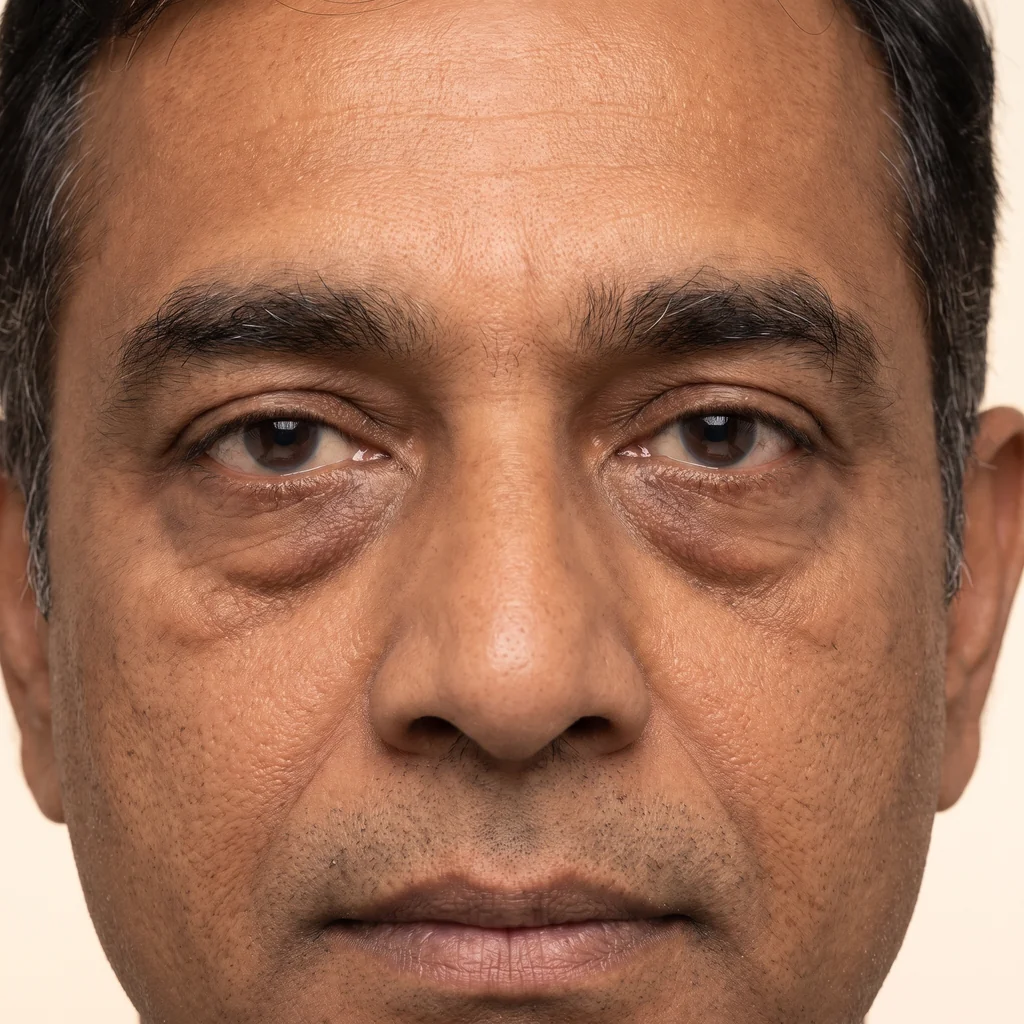
Medical description
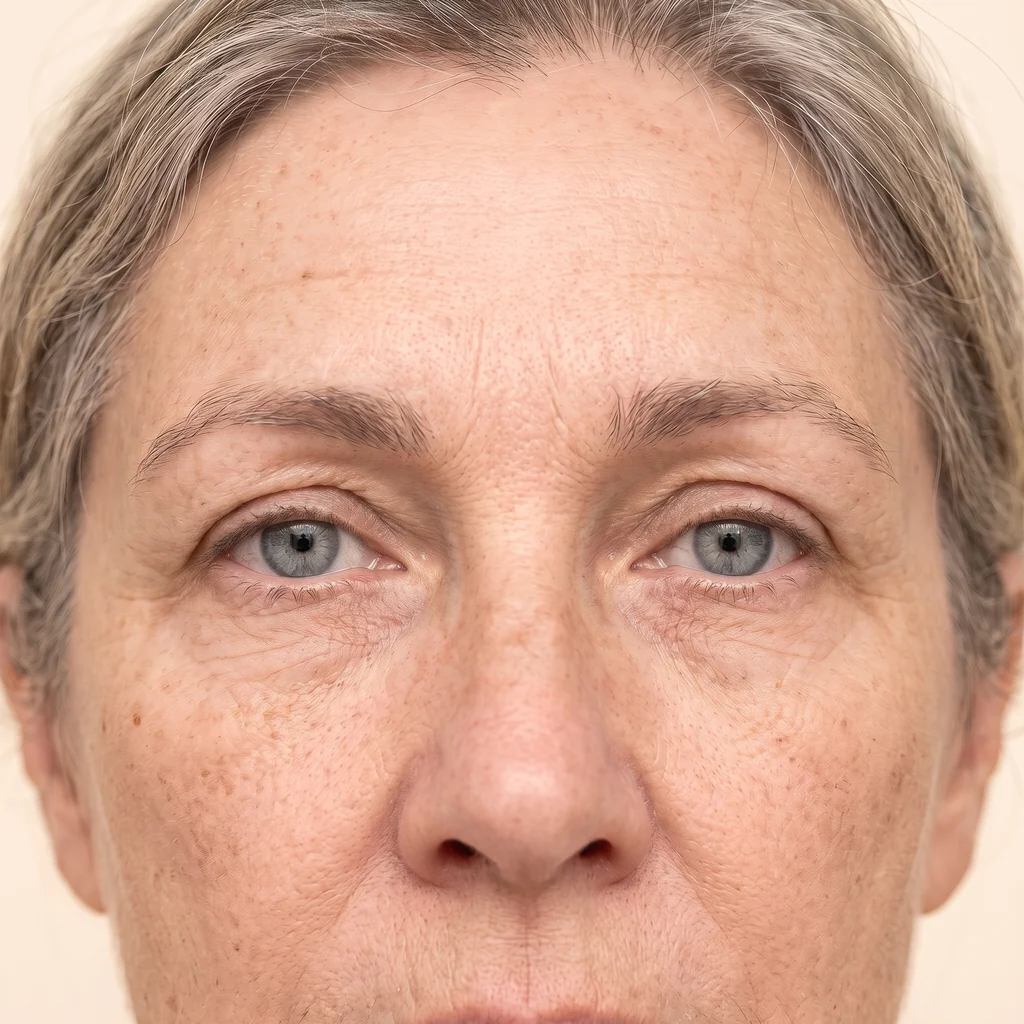
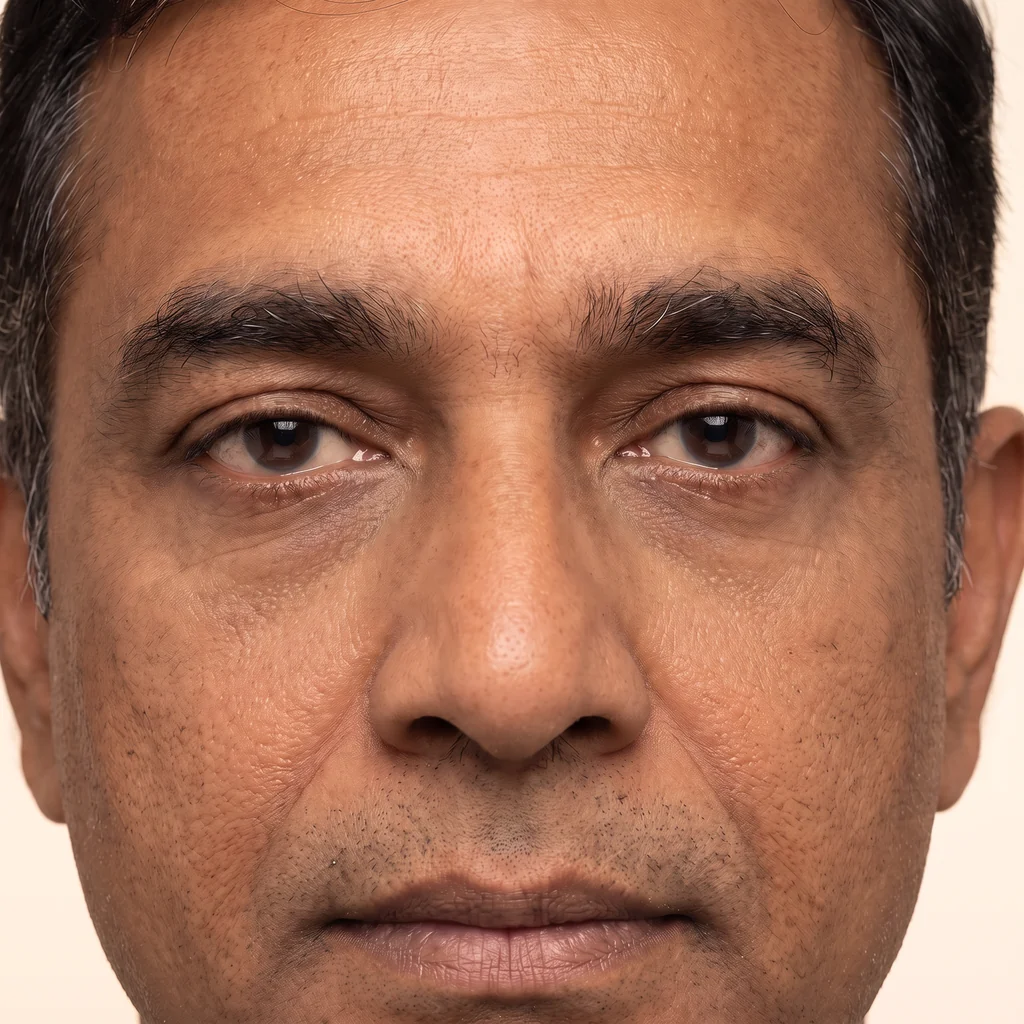
Lower blepharoplasty treats the fat bags that appear under the eyes, excess skin of the lower eyelid and, in some cases, a hollow tear trough. These bags are most often a herniation of the fat surrounding the eye, caused by the loosening of the supporting tissues and sometimes hereditary. Depending on the anatomy, the fat can be removed or redistributed to smooth the transition between the eyelid and the cheek. The procedure aims to soften shadows and rejuvenate the eyes while respecting the shape of the eye.
What the procedure can correct
- Fat bags under the eyes
- Hollow dark circles and a pronounced tear trough
- Excess skin on the lower eyelid
- Tired-looking eyes despite rest
- Fine lines under the eyes caused by sagging
The ideal candidate
A person bothered by persistent under-eye bags, in good health and without any uncontrolled eye condition. Bags caused by fluid retention, allergy or a thyroid problem must be distinguished from fat bags during the examination. The surgeon also assesses the tone of the eyelid, as reinforcement of the outer corner is sometimes necessary.
The technique
The procedure is performed under general anaesthesia or sedation. When there is no excess skin, the transconjunctival approach, through the inside of the eyelid, leaves no visible scar. When the skin is loose, an incision is made just below the lashes, allowing the excess skin to be removed. The fat is excised or repositioned, and a procedure to support the eyelid (canthopexy) may be added.
Your stay, step by step
- 1
Arrival and consultation
Welcome by your coordinator, examination and pre-operative consultation with the practitioner, who confirms the treatment plan.
- 2
Procedure
General, or local with sedation · 1–2 h
- 3
Monitoring in the clinic
Hospital stay: Day case or 1 night. The care team looks after your comfort and post-operative monitoring.
- 4
Check-up before departure
Follow-up visit, care, instructions and prescription before your flight home. Recommended stay: 6–8 days.
- 5
Remote follow-up
Back home, you send your photos and stay in touch with the practitioner through your patient area, for up to 12 months.
Risks and recovery
Swelling, bruising and temporary watery or dry eyes are common; vision may be slightly blurred in the first few days because of the ointments. Less commonly: haematoma, infection, asymmetry, a visible scar or the eyelid being pulled downwards (ectropion), which may require correction. Your surgeon will explain these in detail during the consultation.
The information on this page is provided for guidance only and does not replace a medical consultation. Every procedure carries risks; the indication is made by the practitioner after examination, and results vary from person to person.
Frequently asked questions
Will there be a visible scar?
With the transconjunctival approach, no scar is visible on the skin. When an incision below the lashes is necessary, it is generally very fine and fades over time.
Can the bags come back?
Once the fat has been treated, the bags rarely reappear. The natural ageing of the tissues does, however, continue, which may change the appearance of the eyes over the years.
Can I fly while my eyes are still swollen?
Yes, flying is generally possible after the post-operative check scheduled during your stay. Bring artificial tears and sunglasses for comfort during the journey.