

Medical description
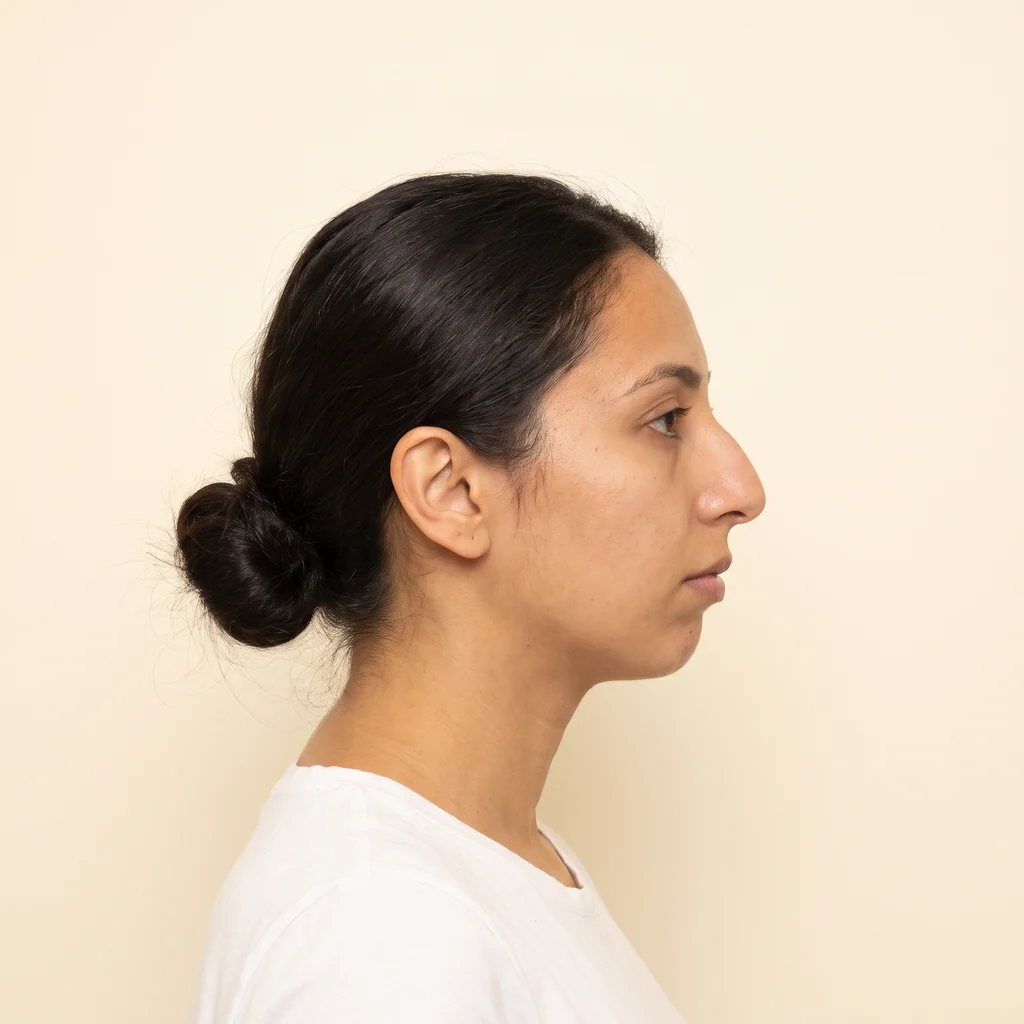
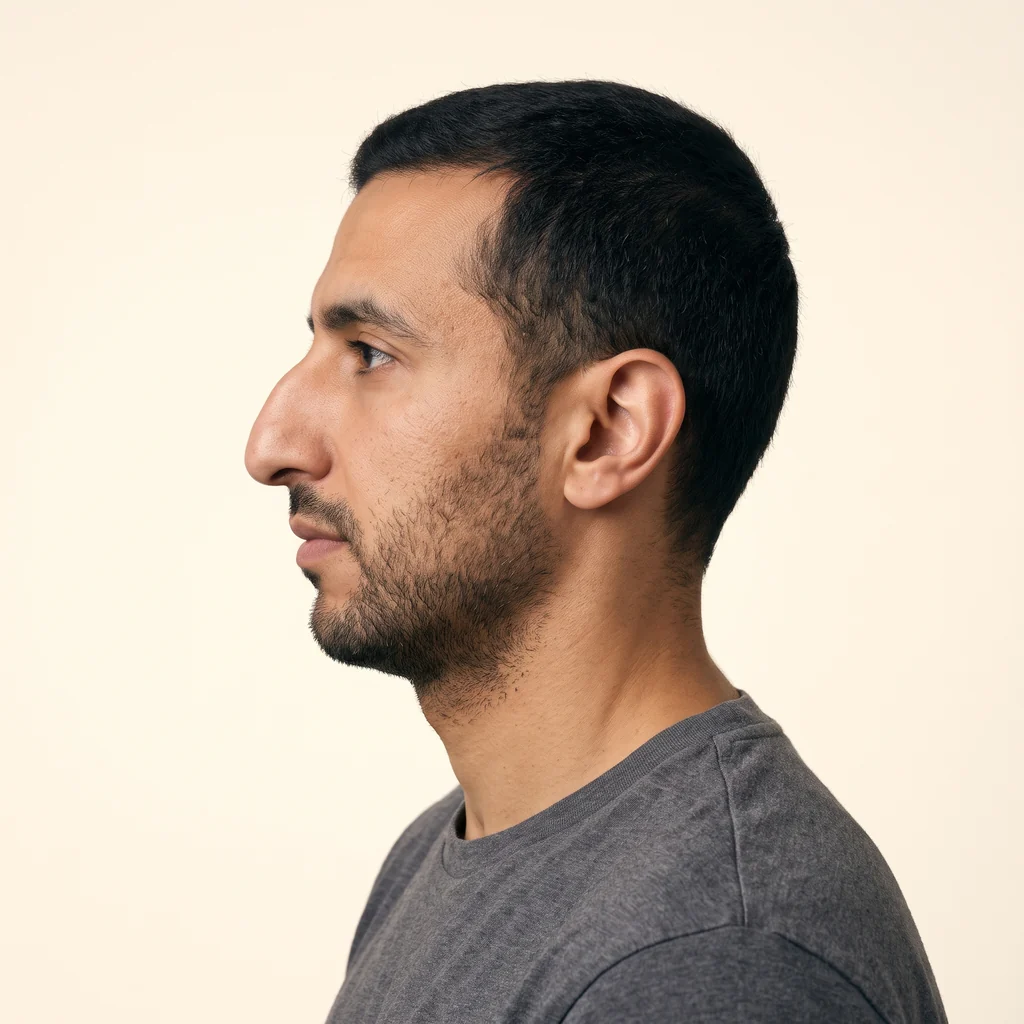
Profileplasty rebalances the profile of the face by combining a rhinoplasty and a genioplasty under the same anaesthetic. The harmony of a profile depends on the balance between the nose, lips and chin: a weak chin can make the nose look bigger, and vice versa. By treating both areas together, the surgeon can correct a bump or a drooping tip of the nose while advancing or reshaping the chin, for a more coherent result than two separate procedures.
What the procedure can correct
- Unbalanced profile between the nose and chin
- Unattractive bump or tip of the nose
- Receding or weak chin
- Nose that looks too big in relation to the chin
- Lack of definition in the lower face
The ideal candidate
An adult in good health whose facial growth is complete and who wishes to improve the balance of their profile. An analysis of the face, sometimes supplemented by photographs and imaging, allows the surgeon to determine the appropriate procedure for each area. A significant problem with the dental bite is more a matter for orthognathic surgery.
The technique
The procedure is performed under general anaesthesia. The nose is reshaped using an open or closed approach, depending on the correction required. The chin is treated either with an implant placed through an incision inside the mouth or under the chin, or by an osteotomy, which moves the chin bone and secures it with small plates. A splint is applied to the nose.
Your stay, step by step
- 1
Arrival and consultation
Welcome by your coordinator, examination and pre-operative consultation with the practitioner, who confirms the treatment plan.
- 2
Procedure
General · 2.5–4 h
- 3
Monitoring in the clinic
Hospital stay: 1 night. The care team looks after your comfort and post-operative monitoring.
- 4
Check-up before departure
Follow-up visit, care, instructions and prescription before your flight home. Recommended stay: 8–10 days.
- 5
Remote follow-up
Back home, your coordinator remains your contact and organises follow-up with the practitioner (photos and messages via WhatsApp, then through your secure patient area once it opens).
Risks and recovery
Swelling and bruising of the face are common in the first few days, together with difficulty breathing through the nose and reduced sensation in the chin and lower lip, which is generally temporary. Less commonly, infection, displacement of the implant, asymmetry, lasting nerve injury or an irregularity requiring a revision may occur. Your surgeon will explain these in detail during the consultation.
The information on this page is provided for guidance only and does not replace a medical consultation. Every procedure carries risks; the indication is made by the practitioner after examination, and results vary from person to person.
Frequently asked questions
Why treat the nose and chin together?
A profile is judged on the balance between these two areas. Treating them at the same time makes it possible to adjust their proportions in relation to each other, with a single anaesthetic and a single recovery period.
Chin implant or osteotomy?
An implant is suited to small deficits in projection. An osteotomy allows greater movements, forwards, vertically or sideways. Your surgeon will choose with you according to your anatomy.
When will I see the result?
The profile can be seen as soon as the splint is removed, but the swelling of the nose subsides slowly: the final result can be assessed after about a year.


